🌙 Introduction: Ramadan Is Meant to Transform the Heart
Self-Reflection: As the first ten days of Ramadan come to an end, Allah invites us to pause and reflect. The Ashra of Mercy is not only about increased worship—it is about inner change. By Day 10, an important question must be asked:
Is my heart changing?
Ramadan is not a countdown of days; it is a journey of the soul. If fasting, prayer, Qur’an, and dhikr do not leave a mark on the heart, then something is missing. Self-reflection is the bridge between effort and transformation.
This day is about honest evaluation—not guilt, not despair, but awareness.
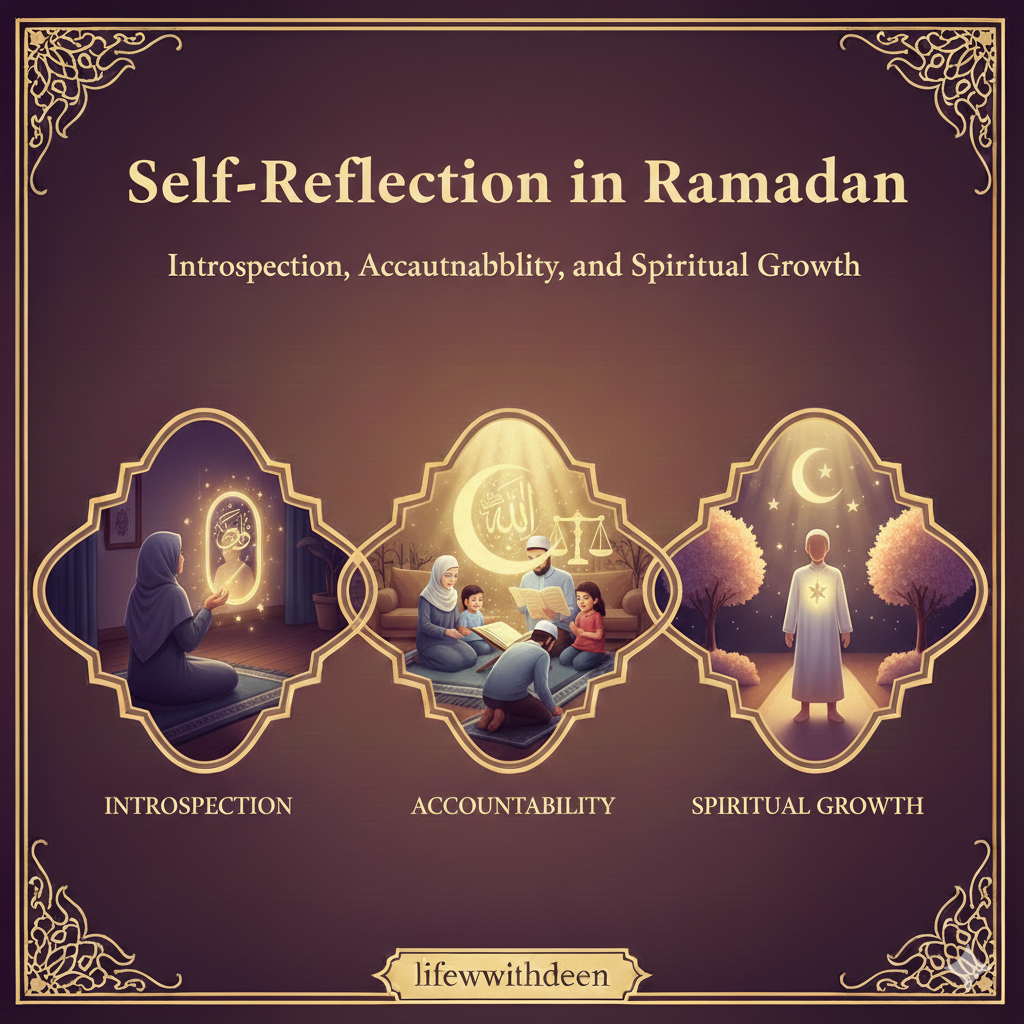
🌿 Why Self-Reflection Is Essential in Ramadan:
Islam encourages believers to regularly examine themselves. Self-reflection:
- corrects intention
- exposes weaknesses
- strengthens sincerity
- guides improvement
Ramadan accelerates spiritual growth, but only for those who observe what is happening within.
Without reflection, Ramadan can pass as a routine. With reflection, it becomes life-changing
🌙 What Does “Heart Change” Mean in Islam?
A changing heart does not mean perfection. It means direction.
Signs of heart change include:
- increased awareness of Allah
- discomfort with sins
- softness during worship
- humility in behavior
- patience during difficulty
Even small shifts indicate progress.
Allah looks at the heart, not appearances.
🌿 Why the Ashra of Mercy Is the Right Time to Reflect
The first Ashra focuses on Rahmah (Mercy). Mercy softens hearts and opens the door for correction without harshness.
Reflection during this Ashra:
- invites Allah’s mercy
- prevents spiritual arrogance
- prepares the heart for forgiveness
- sets the tone for the rest of Ramadan
Day 10 is a spiritual checkpoint.
Questions to Ask Yourself on Day 10
Take a quiet moment and ask honestly:
- Am I more mindful of Allah than before Ramadan?
- Has my Salah improved in focus or consistency?
- Is my tongue more controlled?
- Do I feel closer to the Qur’an?
- Am I kinder and more patient with people?
Reflection is not about answering “yes” to everything—it is about knowing where to grow.
🌿 Areas to Reflect On in Ramadan
1️⃣ Salah
Has prayer become calmer? More meaningful? More consistent?
2️⃣ Fasting
Is fasting helping control desires and behavior, or only hunger?
3️⃣ Speech
Has backbiting, anger, or harsh speech reduced?
4️⃣ Character
Am I responding with patience instead of reaction?
5️⃣ Connection With Allah
Do I turn to Allah more naturally in stress and ease?
Each area reveals the state of the heart.
🌙 Common Barriers to Honest Self-Reflection
Some people avoid reflection because:
- it feels uncomfortable
- it reveals shortcomings
- it challenges habits
But Islam teaches that recognition is the first step to repentance and growth.
Avoiding reflection delays transformation.
🌿 Reflection Without Guilt: A Balanced Approach
Self-reflection in Islam is hope-based, not guilt-driven.
It should lead to:
- renewed intention
- small corrections
- sincere dua
Not to:
- despair
- self-condemnation
- quitting worship
Allah loves effort, not perfection.
🌙 How to Use Reflection to Improve the Rest of Ramadan
Reflection should lead to action.
Based on what you notice:
- strengthen one weak area
- simplify goals
- remove distractions
- increase sincerity
Even one focused change can elevate the remaining days.
🌿 Signs That Ramadan Is Affecting the Heart
You may notice:
- increased sensitivity to sins
- emotional response during dua
- desire to improve quietly
- discomfort with old habits
These are signs of mercy working within you.
🌙 Reflection Leads to Forgiveness and Growth
A reflective heart:
- repents more sincerely
- forgives others easily
- corrects itself gently
This prepares the soul for the Ashra of Forgiveness.
Reflection is not the end of mercy—it is the result of mercy.
🌿 Make Dua After Reflection
After reflecting, ask Allah:
- to accept your efforts
- to correct your weaknesses
- to keep your heart soft
- to guide you through the rest of Ramadan
Dua completes reflection.
🌟 Conclusion: Awareness Is the First Sign of Change
If you are asking, “Is my heart changing?”—that itself is a sign of life in the heart.
Ramadan is not about becoming flawless. It is about moving closer to Allah.
As the Ashra of Mercy ends, let reflection guide the journey ahead.
May Allah allow us to see our faults without despair, recognize growth without pride, accept our efforts with mercy, and continue transforming our hearts throughout Ramadan.
Ameen 🤍