🌙 Introduction: Seeking Forgiveness While Holding Grudges?
During the Ashra of Maghfirah, believers passionately seek Allah’s forgiveness. Yet many hearts remain heavy—not because Allah’s mercy is limited, but because resentment blocks it. Islam teaches a profound principle: forgiving others is closely tied to being forgiven by Allah.
Ramadan is not only a time to ask for forgiveness; it is a time to become forgiving. True repentance is incomplete when the tongue seeks mercy while the heart clings to anger. This sacred Ashra invites believers to examine hidden grudges, release long-held pain, and choose spiritual freedom over emotional burden. Only a heart emptied of resentment can fully receive Allah’s Maghfirah. Forgiveness during Ramadan is therefore not optional—it is essential for spiritual growth, inner peace, and accepted worship.
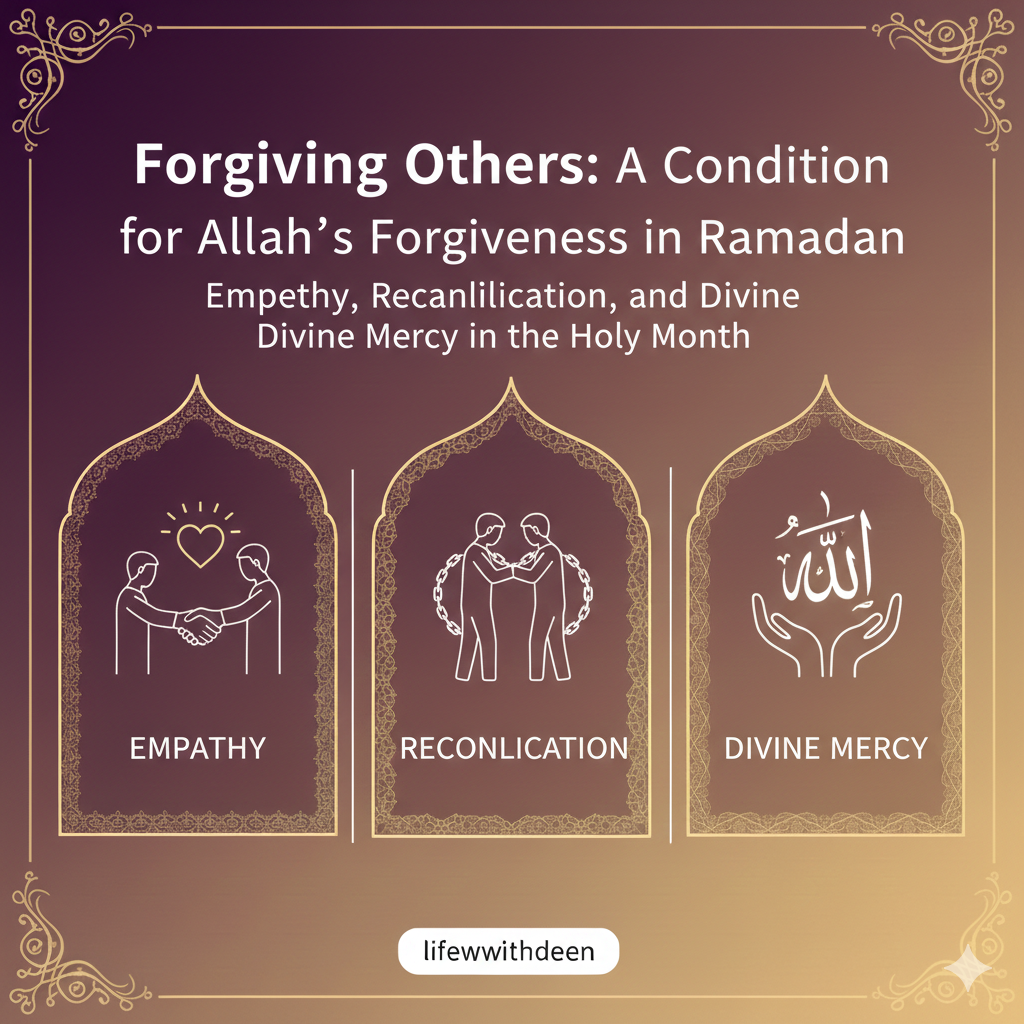
🌿 Forgiveness in Islam: A Divine Attribute We Are Taught to Reflect
Allah loves forgiveness and repeatedly describes Himself as Most Forgiving. He encourages believers to reflect this quality in their dealings with people.
The Qur’an teaches that forgiving others is an act of strength, not weakness. It elevates the believer’s character and opens the door to divine mercy.
Forgiving Others in Islam means:
- releasing resentment
- entrusting justice to Allah
- seeking inner peace
- choosing obedience over ego
🌙 The Link Between Forgiving Others and Allah’s Forgiveness
Islam establishes a direct connection between how we treat people and how Allah treats us.
When a believer forgives sincerely:
- the heart softens
- arrogance dissolves
- humility increases
- Allah’s mercy draws near
Ramadan intensifies this relationship. A heart filled with grudges struggles to experience Maghfirah.
🌿 Why Holding Grudges Blocks Spiritual Growth
Unforgiven anger:
- hardens the heart
- distracts from worship
- fuels negative thoughts
- weakens sincerity
Many people worship extensively in Ramadan yet feel spiritually heavy because their hearts are burdened with unresolved resentment.
Forgiveness clears this burden.
🌙 Forgiveness Does Not Mean Accepting Injustice
Islam does not command believers to accept abuse or deny wrong.
Forgiveness means:
- choosing peace over bitterness
- releasing hatred
- trusting Allah’s justice
It does not require:
- approving wrongdoing
- abandoning boundaries
- denying harm
Forgiveness frees the heart—even if accountability remains with Allah.
🌿 The Prophetic Example of Forgiveness
he Prophet ﷺ consistently chose forgiveness over revenge—even when deeply wronged.
His example teaches that forgiveness:
- elevates character
- heals hearts
- transforms communities
Ramadan encourages believers to follow this prophetic path, especially during the Ashra of Maghfirah.
🌙 Forgiveness as a Purifier During the Ashra of Maghfirah
The purpose of this Ashra is cleansing.
Repentance cleanses sins between the servant and Allah.
Forgiveness cleanses wounds between people.
Both are necessary for a light heart.
A heart seeking Maghfirah must be willing to forgive.
🌿 How Forgiving Others Strengthens Worship
Forgiveness improves:
- focus in Salah
- presence in du‘a
- humility in fasting
- connection with the Qur’an
Letting go of resentment allows worship to flow naturally.
🌙 Practical Steps to Forgive During Ramadan
1️⃣ Make the Intention to Forgive for Allah
Forgive to please Allah—not to justify the harm.
2️⃣ Remember Your Need for Forgiveness
Reflect on your own mistakes and Allah’s mercy toward you.
3️⃣ Release the Burden Gradually
Forgiveness can be a process. Begin with intention.
4️⃣ Ask Allah for Help
Ask Allah to remove bitterness and replace it with peace.
🌿 Common Mistakes Regarding Forgiveness
Avoid:
- delaying forgiveness until emotions fade
- expecting apologies before forgiving
- confusing forgiveness with reconciliation
- thinking forgiveness erases boundaries
Islam teaches emotional release, not self-harm.
🌙 Signs That Forgiveness Is Taking Place
You may notice:
- emotional relief
- reduced anger
- increased calm
- ease in worship
- stronger hope in Allah
These signs indicate inner purification.
🌿 Forgiveness Prepares the Heart for Laylatul Qadr
The final ten nights demand:
- sincerity
- humility
- focus
A heart weighed down by grudges struggles to fully benefit. Forgiveness clears the way for deep worship and acceptance.
🌟 Conclusion: Forgive to Be Forgiven
Forgiveness is not a loss; it is a powerful act of faith.
When a believer forgives others, the heart becomes lighter and more peaceful.
Holding grudges may feel justified, but it quietly drains spiritual energy.
Ramadan teaches us that true strength lies in letting go, not holding on.
Forgiveness opens doors that anger keeps closed.
A heart that forgives is more receptive to Allah’s mercy.
Without forgiving others, repentance remains incomplete.
Allah loves those who purify their hearts along with their actions.