🌙 Introduction: When Ramadan Leaves, What Remains?
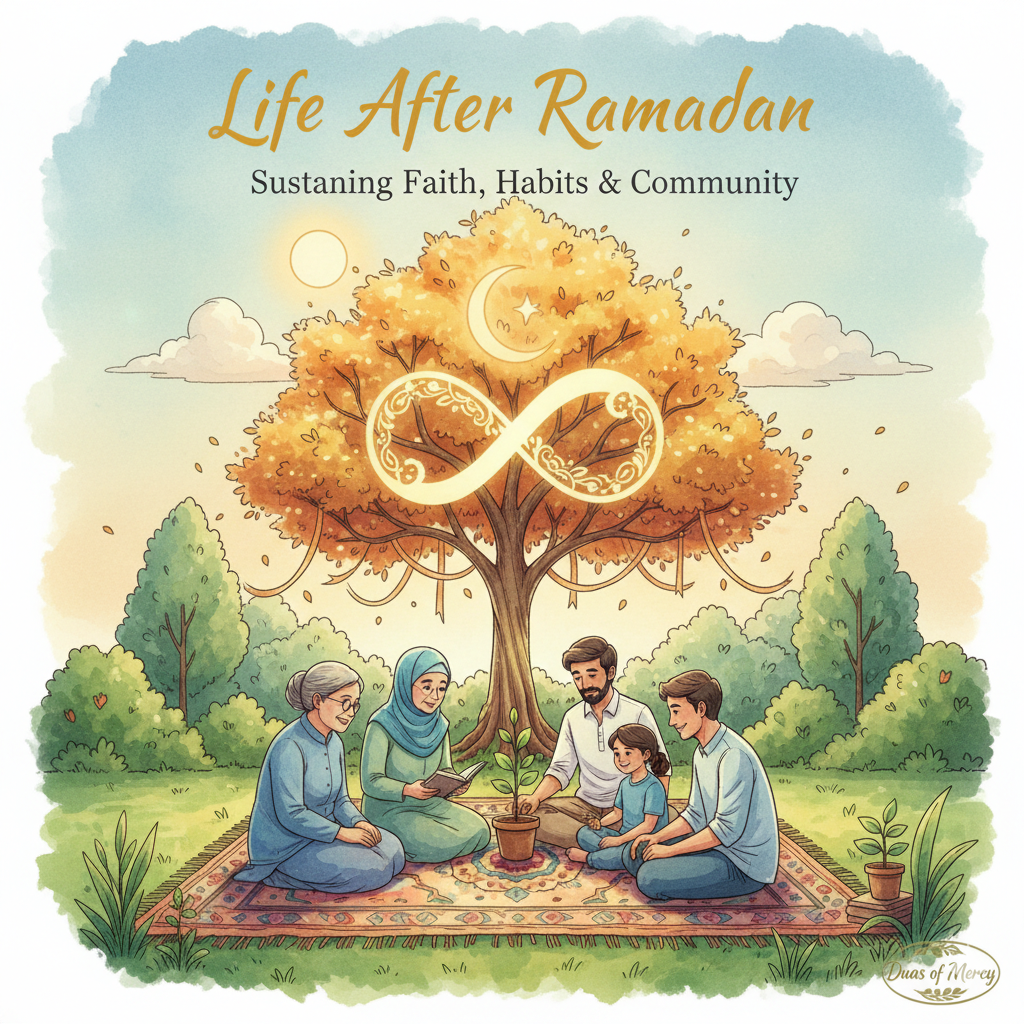
Life After Ramadan: Ramadan does not truly end when the crescent of Shawwāl appears. It ends when its effects disappear from the heart. The final and most important question a believer should ask on Day 30 of Ramadan is not “Did I fast?” or “Did I pray?”—but rather:
“Did Ramadan accept me?”
Islam teaches that acceptance is not always announced. Instead, it is reflected in what comes after. The Ashra of Najāt (Salvation) concludes with self-examination: a sincere effort to recognize whether Allah accepted our worship and whether Ramadan left a lasting imprint on our lives.
🌿 What Does Acceptance Mean in Islam?
Acceptance (qabūl) means that Allah:
- accepted the deed
- forgave shortcomings
- allowed the worship to transform the heart
Acceptance does not mean perfection. It means Allah allowed the act to bring you closer to Him.
A deed that is accepted leaves behind guidance, humility, and consistency.
🌙 The Qur’anic Principle of Signs After Worship
Life After Ramadan: Islam teaches that Allah guides those He accepts.
A core principle found throughout the Qur’an is that guidance follows sincerity. When Allah accepts an act of worship, He opens doors to further obedience and distances the heart from sin.
Thus, what happens after Ramadan becomes the clearest indicator of whether its worship was accepted.
🌿 Sign 1: Consistency in Worship After Ramadan
One of the strongest signs of acceptance is continued obedience.
This includes:
- guarding the five daily prayers
- maintaining duʿāʾ
- continuing Qur’an recitation
- avoiding major sins
Islam teaches that Allah loves deeds that are consistent, even if small. Sudden abandonment of worship may indicate that Ramadan was treated as a seasonal habit rather than sincere devotion.
🌙 Sign 2: Increased Dislike for Sin
If Ramadan was accepted, sin begins to feel heavier afterward.
You may notice:
- guilt returning quickly
- discomfort with old habits
- hesitation before wrongdoing
This sensitivity is a mercy. A heart that hates sin more than before has been softened by Ramadan.
🌿 Sign 3: Humility Instead of Pride
A believer whose Ramadan was accepted does not boast about fasting or prayer.
Instead:
- fear of rejection increases
- humility deepens
- gratitude replaces confidence
Islam teaches that arrogance destroys deeds, while humility protects them. Acceptance produces quiet gratitude, not loud celebration.
🌙 Sign 4: Desire to Continue Good Deeds
Acceptance creates momentum.
You may feel drawn to:
- voluntary fasting
- extra prayers
- charity
- learning about Islam
This desire is not self-generated—it is divine encouragement. Allah opens doors to good for those whose deeds He accepts.
🌿 Sign 5: Improved Character and Conduct
Ramadan trains character as much as it trains worship.
Signs of acceptance include:
- increased patience
- gentler speech
- forgiveness
- control of anger
Islam teaches that the Prophet ﷺ was sent to perfect character. Worship without character change is incomplete.
🌙 Sign 6: Continued Concern About Acceptance
Ironically, one sign of acceptance is worrying whether deeds were accepted.
A sincere believer:
- fears rejection
- continues making duʿāʾ for acceptance
- does not assume success
This concern reflects sincerity, not doubt. It keeps the heart connected to Allah.
🌿 Common Mistakes After Ramadan: Life After Ramadan
Avoid:
- abandoning worship completely
- treating Ramadan as “over” spiritually
- returning to sins immediately
- neglecting gratitude
Life after Ramadan tests whether the worship was real or routine.
🌙 Life After Ramadan Is the Real Test
Ramadan is training. Life after Ramadan is the exam.
The believer who:
- maintains prayer
- avoids sin
- continues remembrance
- preserves humility
has passed the test of Ramadan.
Islam teaches that Allah judges not moments, but directions.
🌿 How to Protect the Acceptance of Ramadan
To preserve what Ramadan built:
- choose one consistent act to maintain
- keep company with righteous people
- limit distractions
- renew intentions regularly
Protection of deeds is part of sincerity.
🌙 Ending Ramadan With Hope and Tawakkul
Islam teaches balance.
End Ramadan:
- hoping Allah accepted
- fearing rejection
- trusting Allah’s mercy
- committing to continue
Hope fuels effort. Fear protects sincerity.
🌿 Ramadan May Leave—But Allah Does Not
Ramadan is a guest. Allah is permanent.
The believer does not worship Ramadan—the believer worships Allah, the Lord of Ramadan and every month after it.
If Allah allowed you to worship Him for thirty days, He can allow you to worship Him for a lifetime.
🌟 Conclusion: Acceptance Is Seen in the Path Forward
Acceptance is not a feeling—it is a direction.
If your heart is softer, your sins feel heavier, your worship feels more sincere, and your attachment to Allah feels stronger—then rejoice quietly.
Ramadan has done its work.
May Allah accept our fasting, prayers, duʿāʾ, charity, and repentance, allow Ramadan to live on in our hearts, and grant us lasting guidance and salvation.
Āmīn 🤍