Introduction: When Wrong Becomes Normal
One of the most dangerous stages of moral decline is not when sin exists — but when sin is normalized, defended, and openly practiced without shame. At that point, warnings feel offensive, and guidance is treated as hate.
The Qur’an addresses this reality through the powerful and painful story of Prophet Lut (AS). His story is not meant to target individuals, but to warn societies about what happens when moral boundaries collapse and divine guidance is repeatedly rejected.
This incident is a reminder that Allah’s mercy always comes before His punishment — but His warnings should never be ignored.
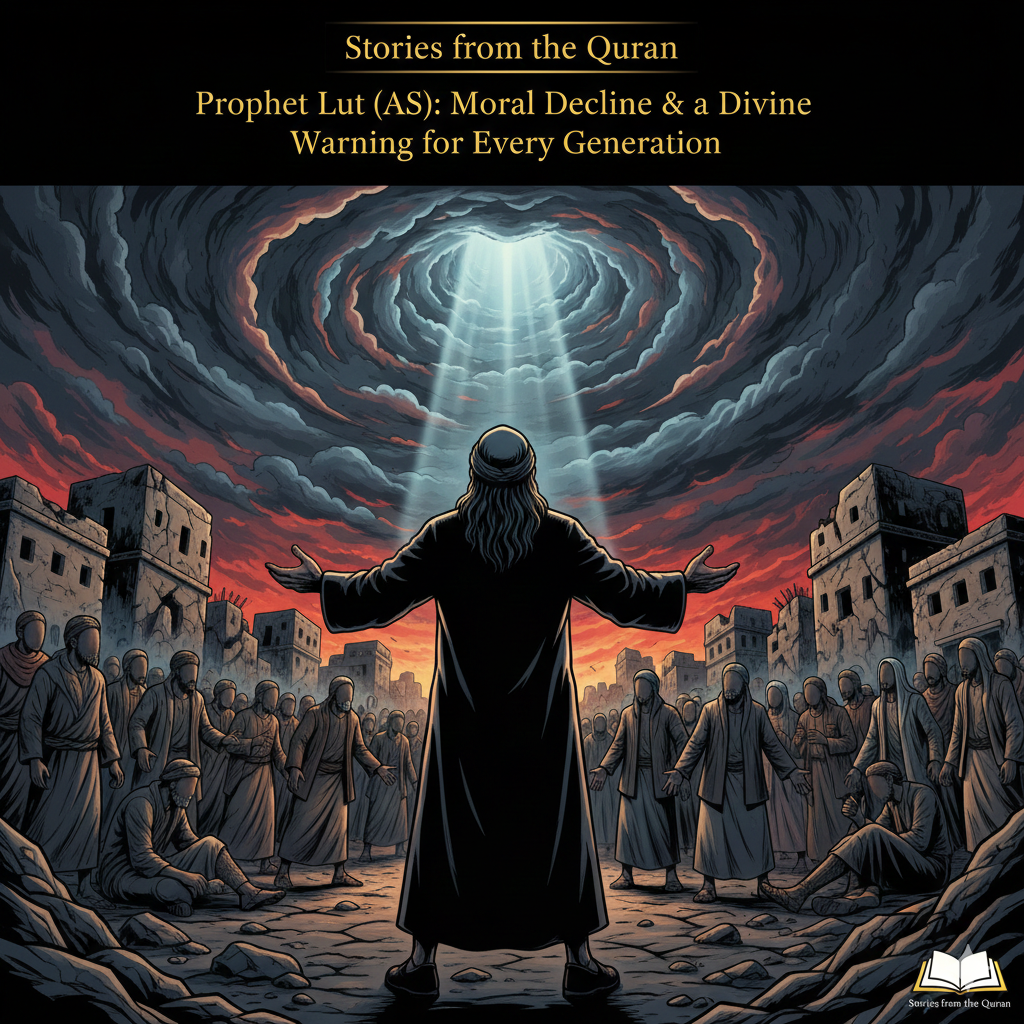
The Mission of Prophet Lut (AS)
Prophet Lut (AS) was sent to a community that had fallen into extreme moral corruption. Their behavior was not hidden or occasional — it was public, celebrated, and defended.
Allah describes the shock of their actions:
“Indeed, you approach men with desire, instead of women. Rather, you are a transgressing people.”
(Surah Al-A‘raf 7:81)
This was not just a personal sin; it was a societal rebellion against Allah’s natural order.
Dawah in a Hostile Environment
Prophet Lut (AS) did not remain silent. He warned his people repeatedly, reminding them of:
- Allah’s boundaries
- Human dignity
- Accountability in the Hereafter
He called them toward repentance and moral correction, not humiliation.
But instead of reflecting, the people responded with mockery and threats.
The Qur’an records their reaction:
“Bring us the punishment of Allah, if you are of the truthful.”
(Surah Al-‘Ankabut 29:29)
When people challenge divine warnings, it shows how far the heart has drifted from humility.
Moral Decline Always Brings Arrogance
One consistent pattern in Qur’anic history is this:
Moral corruption is always accompanied by arrogance.
The people of Lut:
- Rejected advice
- Threatened the Prophet
- Tried to silence moral voices
- Considered themselves progressive
They even demanded that Lut (AS) be expelled for being “pure”:
“Expel them from your city! Indeed, they are people who keep themselves pure.”
(Surah Al-A‘raf 7:82)
This verse shows how upside-down morality becomes when sin is normalized.
Angels Arrive as a Final Warning
Before punishment, Allah sent angels to Prophet Lut (AS) as guests — a final test for his people. Instead of respecting hospitality, they rushed toward evil with no restraint.
This moment revealed the point of no return.
Allah commanded Lut (AS) to leave the city at night with the believers, showing that Allah always protects those who obey Him.
The Divine Punishment
After all warnings were ignored, Allah’s punishment came with precision and justice.
Allah says:
“So We turned it upside down and rained upon them stones of baked clay.”
(Surah Hud 11:82)
This was not random destruction. It was the result of persistent defiance, after mercy, reminders, and time for repentance were repeatedly offered.
Why This Story Is Repeated in the Qur’an
The story of Prophet Lut (AS) appears multiple times in the Qur’an because:
- Moral collapse repeats itself in history
- Societies often ignore warnings
- Truth becomes uncomfortable when desires dominate
- Accountability must be remembered
Allah says:
“Indeed in that is a sign for those who fear the painful punishment.”
(Surah Adh-Dhariyat 51:37)
Key Lessons from Prophet Lut (AS)
1️⃣ Moral Decay Is a Collective Danger
When society accepts sin openly, consequences affect everyone.
2️⃣ Silence Is Not an Option
Prophet Lut (AS) spoke despite hostility — truth must be voiced.
3️⃣ Allah’s Mercy Comes Before Punishment
Warnings, time, and guidance always precede consequences.
4️⃣ Being “Modern” Is Not Being Right
Progress without morality leads to destruction.
5️⃣ Allah Saves the Obedient
Believers were protected — obedience is always the way out.
Relevance in Today’s World
Modern societies face similar patterns:
- Normalizing immorality
- Mocking religious values
- Silencing moral voices
- Redefining right and wrong
- Rejecting accountability
The story of Prophet Lut (AS) reminds us that Allah’s moral laws do not change with trends.
How Believers Should Respond Today
Islam teaches balance:
- Speak truth with wisdom
- Hold firm to moral values
- Avoid hatred and arrogance
- Call toward guidance with sincerity
- Trust Allah with outcomes
The role of believers is reminder, not enforcement — accountability belongs to Allah.
Conclusion: A Warning Rooted in Mercy
The story of Prophet Lut (AS) is not about condemnation — it is about prevention. Allah does not wish destruction for humanity; He wishes guidance, dignity, and purity.
But when warnings are mocked and boundaries are erased, consequences follow.
May Allah protect our hearts, preserve our moral compass, and keep us among those who listen before it is too late.
🤲 A Short Dua
O Allah, protect us from moral blindness, grant us wisdom to uphold truth, and keep our hearts firm upon Your guidance.