🌙 Introduction: What Does It Mean to Have Good Character?
What makes someone a good Muslim?
Is it only how regularly they pray? How much Quran they recite? How often they visit the mosque? Or how much Islamic knowledge they have?
Worship is essential in Islam, but another important question deserves our attention: How do we treat the people around us?
How do we speak to our parents when we are frustrated? How do we treat our spouse when we disagree? How do we behave with people who cannot offer us anything in return? How do we respond when someone makes a mistake or treats us unfairly?
These everyday situations reveal important aspects of our character.
In Islam, good character is commonly described as Akhlaq. It includes truthfulness, kindness, patience, humility, generosity, fairness, keeping promises, controlling anger, and treating people with dignity.
The Prophet Muhammad ﷺ said:
“The best amongst you are those who have the best manners and character.”
This narration is recorded in Sahih al-Bukhari 3559. (Read the hadith on Sunnah.com)
This teaching reminds us that good character is not a minor part of a Muslim’s life. It is an important expression of faith.
In this guide, we will explore what Akhlaq means, what the Quran and authentic Sunnah teach about it, how the Prophet ﷺ demonstrated good character, and how we can improve our manners in everyday life.
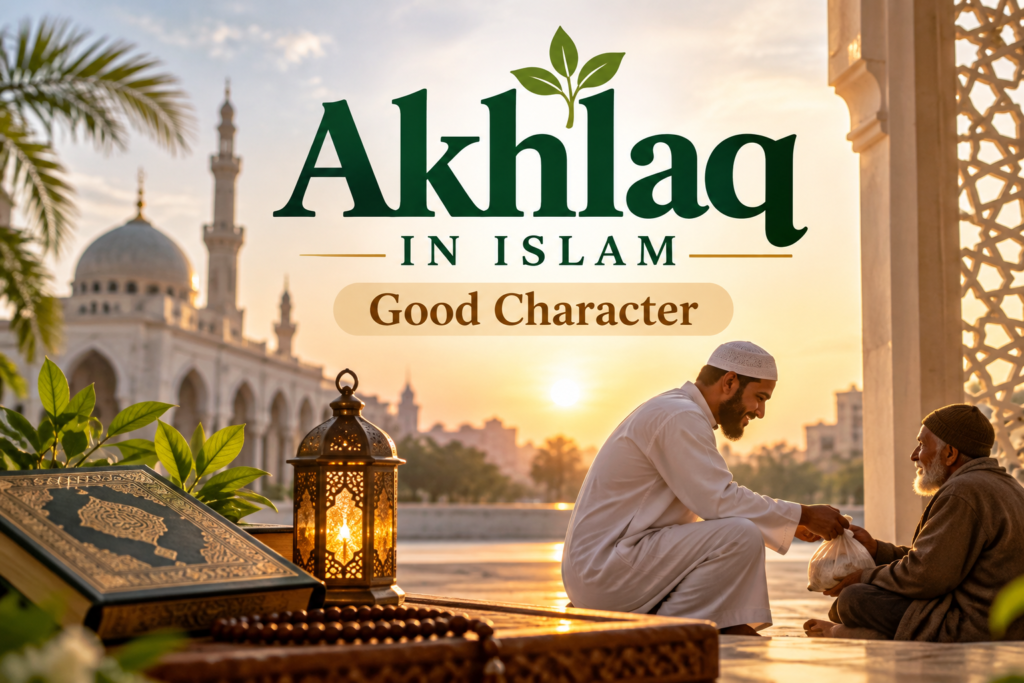
📖 What Is Akhlaq in Islam?
Akhlaq is an Arabic term commonly used for character, manners, and moral qualities. Good Akhlaq includes the attitudes and behaviors that help a person act with honesty, kindness, patience, humility, justice, and respect.
It is reflected in both our words and our actions.
For example, a person with good character tries to:
- 🤝 Speak truthfully, even when lying seems easier.
- ❤️ Treat family members with kindness and respect.
- 🗣️ Avoid insulting, mocking, and humiliating others.
- ⚖️ Deal fairly with people, including those they dislike.
- 🌱 Admit mistakes instead of blaming everyone else.
- 🤲 Help others without constantly expecting something in return.
- 🛡️ Control anger instead of allowing it to lead to harmful behavior.
- 💚 Celebrate other people’s blessings instead of resenting them.
Good character is not the same as being popular, charming, or agreeable to everyone.
A person may be polite in public but cruel to their family. Someone may speak beautifully about Islam but treat employees unfairly. Another person may appear humble while looking down on those with less money or status.
True character is revealed by how we behave when doing the right thing is difficult.
🕌 Why Is Good Character Important in Islam?
Good character is deeply emphasized in the Quran and Sunnah.
In Sahih al-Bukhari, the Prophet ﷺ stated that the best people are those with the best character. (Sahih al-Bukhari 3559)
The Prophet ﷺ also taught that the most complete believers in faith are those with the best character, and the same hadith emphasizes treating women well. This narration is recorded in Jami at-Tirmidhi 1162, which Imam al-Tirmidhi graded Hasan Sahih. (Read the hadith)
These teachings show that good character is closely connected with faith.
However, this does not mean good manners replace prayer, honesty about beliefs, or other religious obligations. Rather, a Muslim should strive to combine sound faith, sincere worship, and good conduct.
A useful question to ask ourselves is:
Does my behavior reflect the values I say I believe in?
🌟 What Does the Quran Say About Good Character?
The Quran provides guidance on how Muslims should develop their character and interact with others.
📜 1. The Prophet Muhammad ﷺ Had Excellent Character
Allah says to the Prophet Muhammad ﷺ:
“And indeed, you are of a great moral character.”
Quran 68:4 praises the Prophet’s excellent character. (Read Quran 68:4)
His life provides Muslims with an example of how Islamic teachings should be reflected in conduct. The Quran also identifies the Messenger of Allah as an excellent example for those who hope in Allah and the Last Day in Quran 33:21. (Read Quran 33:21)
⚖️ 2. Allah Commands Justice and Excellence
In Quran 16:90, Allah commands justice and excellence in conduct, along with generosity toward relatives, and forbids immorality, wrongdoing, and transgression. (Read Quran 16:90)
This verse reminds us that good character involves more than being friendly.
It includes being fair, fulfilling responsibilities, avoiding wrongdoing, and doing what is right even when no one is watching.
🗣️ 3. Speak in the Best Manner
Allah instructs believers to tell His servants to say what is best in Quran 17:53. (Read Quran 17:53)
Our words can bring comfort, solve disagreements, and strengthen relationships. They can also humiliate people, spread suspicion, and create unnecessary conflict.
Before speaking, ask yourself:
Is this true? Is it appropriate? Can I express it without unnecessary hurt?
🌱 4. Control Anger and Forgive Others
Quran 3:134 praises those who restrain anger and pardon people, and states that Allah loves those who do good. (Read Quran 3:134)
This does not mean that Muslims must accept abuse or never seek justice. It means that anger should not automatically control our words and decisions, and forgiveness should be considered when it is appropriate.
❤️ 5. Avoid Mockery and Insults
In Quran 49:11, Allah prohibits believers from ridiculing one another, insulting one another, and using offensive nicknames. (Read Quran 49:11)
This guidance is relevant in family gatherings, workplaces, friendships, online discussions, and social media comments.
A joke is not automatically harmless simply because the speaker laughs.
Good character requires consideration for the dignity of others.
🕋 How Did the Prophet Muhammad ﷺ Demonstrate Good Character?
The Prophet Muhammad ﷺ did not merely teach good manners through words. His character provided a practical example for Muslims.
❤️ Kindness in Everyday Interactions
The Prophet ﷺ was known for excellent manners and did not use obscene or abusive speech. This is described in Sahih al-Bukhari 3559. (Read the narration)
This reminds us that strength of character does not require humiliating others.
You can correct a mistake without insulting the person. You can disagree without becoming abusive. You can be firm while remaining respectful.
🌿 Gentleness in Dealing With People
In Sahih Muslim, the Prophet ﷺ taught that Allah loves gentleness and that gentleness beautifies what it is present in. The narration is found in the hadith on the virtue of gentleness, including Sahih Muslim 2594. (Read the relevant narrations)
Gentleness does not mean weakness.
It means responding with care and self-control instead of unnecessary harshness.
🤝 Respect for Other People’s Rights
The Prophet ﷺ taught that a Muslim is someone from whose tongue and hands other Muslims are safe. This is recorded in Sahih al-Bukhari 10. (Read the hadith)
This is a powerful standard for evaluating our behavior.
Do our words make people feel safe, or do we regularly insult and threaten them? Do our actions protect people’s rights, or do we take advantage of them?
Good character includes avoiding harm as well as actively doing good.
💚 12 Important Qualities of Good Character in Islam
Good character is made up of many qualities. Here are twelve important ones to cultivate in daily life.
1. 🤥 Truthfulness (Sidq)
A truthful Muslim avoids lying, false promises, exaggeration intended to deceive, and misleading statements.
For example, if you make a mistake at work, admit it instead of creating excuses that blame someone else.
Truthfulness builds trust and reflects the Quran’s instruction to speak appropriately and uprightly.
2. 🌱 Humility (Tawadu)
Humility means recognizing that our abilities, knowledge, and opportunities are blessings from Allah.
It does not mean pretending that you have no skills or allowing others to violate your rights.
A humble person can be confident without believing that they are superior to everyone else.
3. 🛡️ Patience (Sabr)
Patience helps us remain committed to what is right during hardship, frustration, and disappointment.
It may mean responding calmly when someone provokes you, continuing a beneficial effort despite setbacks, or avoiding a rushed decision during an emotional moment.
4. 🤲 Generosity (Karam)
Generosity includes sharing wealth, helping people in need, offering your time, and being willing to assist others within your ability.
It does not require giving beyond your means or neglecting your family’s legitimate needs.
5. 💚 Compassion (Rahmah)
Compassion means recognizing the difficulties of others and responding with care.
You may demonstrate it by listening patiently, helping a struggling colleague, visiting someone who is unwell, or treating children gently.
6. ⚖️ Justice (Adl)
Justice requires fairness, even when the person involved is not your friend.
Do not judge a disagreement solely according to who is closer to you. Listen carefully, avoid false accusations, and respect other people’s rights.
7. 🤝 Keeping Promises
When you make a commitment, take it seriously.
If you agree to complete a task by a certain date, make a reasonable effort to fulfill your responsibility. If circumstances prevent you from doing so, communicate honestly rather than repeatedly making empty promises.
8. 🗣️ Good Speech
A Muslim should avoid unnecessary insults, mockery, slander, and harmful gossip.
The Prophet ﷺ taught believers to speak good or remain silent. This teaching appears in Sahih al-Bukhari 6018 and Sahih Muslim 47a. (Sahih al-Bukhari 6018, Sahih Muslim 47a)
9. ❤️ Forgiveness
Forgiveness can help repair relationships and free the heart from persistent resentment.
However, forgiveness does not necessarily mean restoring trust immediately, ignoring wrongdoing, or remaining in an unsafe situation. Justice and protection from harm still matter.
10. 🌸 Gratitude (Shukr)
Gratitude means recognizing Allah’s blessings and responding with appreciation.
It also includes thanking people for their kindness instead of assuming that their help is something you are automatically owed.
11. 🧘 Self-Control
Good character requires managing impulses.
When you feel angry, jealous, embarrassed, or frustrated, pause before speaking or acting. Give yourself time to respond thoughtfully rather than allowing a temporary emotion to cause lasting harm.
12. 🫶 Respect for Others
Treat people with dignity regardless of their wealth, education, occupation, age, or social status.
You can disagree with another person while still treating them fairly.
Respect does not mean agreeing with everyone. It means refusing to make someone’s dignity conditional on whether they agree with you.
🏡 Good Character in Family Life
Our character becomes particularly visible in our homes.
It is often easier to be polite in public than to remain patient with family members when we are tired, stressed, or upset.
👨👩👧 1. Good Character Toward Parents
Speak respectfully to your parents and treat them with kindness.
When disagreements arise, avoid unnecessary insults and harshness. At the same time, respect does not mean obeying a request to commit a sin or accepting wrongdoing without seeking appropriate help.
The Quran gives especially clear guidance about kindness toward parents in Quran 17:23–24. (Read Quran 17:23–24)
💍 2. Good Character Between Husband and Wife
A healthy marriage requires respect, honesty, patience, and consideration.
Do not use private information to humiliate your spouse during an argument. Avoid threats, insults, and deliberately hurtful comparisons.
The Prophet ﷺ emphasized good treatment of women in the narration of Jami at-Tirmidhi 1162. (Read the hadith)
Good character at home matters even when there are no guests to impress.
🧒 3. Good Character Toward Children
Children learn from what adults do as well as what they say.
Parents can model patience, apologise after making mistakes, explain rules clearly, and correct children without unnecessary humiliation.
Discipline should be responsible and proportionate, not driven by uncontrolled anger.
🤝 4. Good Character Toward Relatives
Family relationships can involve misunderstandings, competition, and old disagreements.
Try to avoid spreading private family matters, escalating minor conflicts, or treating relatives harshly simply because you are familiar with them.
Where possible, communicate directly and respectfully.
🏢 Good Character at Work and in Business
Islamic manners are not limited to religious gatherings or the home.
They also matter in professional life.
A Muslim employee should strive to be punctual, truthful, responsible, fair, and respectful toward colleagues. A manager should avoid humiliating staff, showing unjust favoritism, or using authority to exploit others.
In business, good character includes honest descriptions of products, fair dealing, keeping commitments, and avoiding deliberate deception.
💼 A Practical Example
Imagine a colleague has made an error in a report.
You could embarrass them in front of the entire team.
Or you could explain the problem privately, provide the relevant facts, and help them correct it.
The second response is often more constructive and respectful.
Good character does not require hiding mistakes. It requires addressing them fairly.
📱 Good Character on WhatsApp and Social Media
Digital behavior is part of everyday conduct too.
Before posting a comment, forwarding a message, or sharing a screenshot, consider its truthfulness, purpose, and possible effects.
🚫 Avoid These Habits
- Mocking people for their appearance, income, or background.
- Forwarding unverified allegations.
- Sharing private conversations to embarrass someone.
- Joining comment sections simply to insult others.
- Exaggerating achievements to impress followers.
- Using religious language to justify personal attacks.
A person should not assume that harmful speech becomes harmless merely because it happens online.
The same principles of honesty, justice, privacy, and respect remain important.
⚠️ Common Misunderstandings About Good Character
❌ 1. “If I Am Polite, Everything Else Does Not Matter.”
Politeness is valuable, but good character also involves honesty, justice, fulfilling responsibilities, and respecting people’s rights.
A charming person who regularly deceives others is not demonstrating complete good character.
❌ 2. “Good Character Means Never Disagreeing.”
You can disagree respectfully.
You can correct misinformation and oppose wrongdoing without insulting the person involved.
❌ 3. “Being Kind Means Saying Yes to Everyone.”
Kindness does not require neglecting your responsibilities, giving beyond your means, or accepting mistreatment.
You can set boundaries respectfully.
❌ 4. “Good Character Is Only About How Others See Me.”
A person might behave well in public to gain praise while treating others poorly in private.
Islamic character concerns sincerity as well as outward conduct. Allah says in Sahih Muslim 2564c that He looks at hearts and deeds, not merely faces and wealth. (Read Sahih Muslim 2564c)
The goal is to improve our character sincerely, not merely to build a good public image.
🌱 How to Improve Your Akhlaq: 10 Practical Steps
Good character can be developed through awareness, practice, and sincere effort.
1. 📖 Study the Quran and Sunnah
Learn what Allah and His Messenger ﷺ teach about speech, patience, humility, justice, and relationships. Apply what you learn in real situations.
2. 🪞 Review Your Behavior Every Day
At the end of the day, ask yourself:
- Did I hurt someone unnecessarily?
- Was I honest in my dealings?
- Did I control my anger?
- Did I fulfill my commitments?
- Is there something I should correct tomorrow?
Honest self-reflection can help you identify patterns that need improvement.
3. 🛑 Pause Before Reacting
When you are angry or frustrated, take a moment before responding.
You do not have to answer every message immediately or resolve every disagreement while emotions are high.
4. 🗣️ Improve the Way You Speak
Try replacing insults with clear explanations, accusations with questions, and unnecessary criticism with constructive feedback.
5. ❤️ Practise Kindness at Home
Offer practical help, listen without interrupting, thank family members, and acknowledge when you have made a mistake.
6. ⚖️ Be Fair Even When It Is Difficult
Do not distort the facts simply because the person involved is someone you dislike.
Fairness is especially important during disagreements.
7. 🤝 Fulfil Your Responsibilities
Keep promises where you reasonably can. If circumstances change, communicate promptly and honestly.
8. 🌸 Spend Time With People of Good Character
The people around us can influence our habits. Seek company that encourages honesty, kindness, responsibility, and beneficial behavior.
9. 🤲 Ask Allah for Help
Make dua that Allah improves your character, purifies your heart, and helps you respond well when tested.
10. 🌿 Work on One Quality at a Time
You do not need to transform every aspect of your character in one day.
Start with one area—for example, controlling anger or avoiding gossip—and practise it consistently while continuing to work on other responsibilities.
🗓️ A Simple 7-Day Akhlaq Improvement Challenge
Use this challenge as a practical starting point.
🌱 Day 1: Practise Truthfulness
Avoid unnecessary exaggeration and admit mistakes honestly.
❤️ Day 2: Perform an Act of Kindness
Help someone without expecting recognition.
🗣️ Day 3: Protect Your Tongue
Avoid insulting, mocking, backbiting, and spreading unverified stories.
🧘 Day 4: Practise Patience
Pause before responding to something that irritates you.
🤝 Day 5: Fulfil a Commitment
Complete a pending responsibility or communicate honestly about a delay.
🌸 Day 6: Show Gratitude
Thank someone who has helped you and reflect on the blessings Allah has given you.
🤲 Day 7: Review Your Character
Identify one good habit you want to maintain and one harmful habit you want to work on.
The goal is not to claim that seven days will perfect your character. It is to begin a sincere process of improvement.
🤲 A Dua for Good Character
A Muslim can ask Allah sincerely to improve their character and help them act according to what is pleasing to Him.
One authentic supplication reported in Sahih Muslim is:
اللَّهُمَّ اهْدِنِي لِأَحْسَنِ الْأَخْلَاقِ، لَا يَهْدِي لِأَحْسَنِهَا إِلَّا أَنْتَ، وَاصْرِفْ عَنِّي سَيِّئَهَا، لَا يَصْرِفُ عَنِّي سَيِّئَهَا إِلَّا أَنْتَ
Transliteration: Allahumma ihdini li-ahsanil-akhlaq, la yahdi li-ahsaniha illa Anta, wasrif ‘anni sayyi’aha, la yasrifu ‘anni sayyi’aha illa Anta.
Meaning: O Allah, guide me to the best of character, for none can guide to the best of it except You; and turn away from me its bad qualities, for none can turn them away from me except You.
Source: Sahih Muslim 771. Read the narration
This supplication asks Allah for guidance toward good character and protection from bad qualities. You can make it sincerely while also taking practical steps to improve your conduct.
❓ Frequently Asked Questions About Good Character in Islam
🌿 What is good character in Islam?
Good character, or Akhlaq, refers to moral qualities and conduct such as honesty, humility, patience, kindness, justice, generosity, and respect for others. The Quran and Sunnah repeatedly emphasize good conduct.
📖 What does the Quran say about Akhlaq?
The Quran praises the Prophet Muhammad ﷺ for his great moral character in Quran 68:4. It also commands justice and excellence in Quran 16:90, and teaches believers to speak in the best manner in Quran 17:53.
🕌 What did the Prophet ﷺ say about good character?
The Prophet ﷺ said that the best people are those with the best manners and character. This is recorded in Sahih al-Bukhari 3559.
⚖️ Is good character part of faith?
Yes. Jami at-Tirmidhi 1162 describes those with the best character as the most complete in faith. Good character is an important part of a Muslim’s religious life, alongside belief, worship, and fulfilling obligations.
❤️ How can I improve my Akhlaq?
Study the Quran and Sunnah, review your behavior, practise honesty, control anger, treat people fairly, fulfil commitments, and ask Allah for help. Consistent small improvements can support long-term change.
👨👩👧 Why is good character important in family life?
Family members experience our behavior closely. Patience, respect, honesty, kindness, and fair communication help protect relationships and resolve disagreements constructively.
📱 Does good character apply to social media?
Yes. Muslims should try to be truthful, respectful, and fair online, avoiding insults, unverified claims, harmful gossip, and the unnecessary disclosure of private information.
🌸 Does good character mean being soft with everyone?
No. A person can be firm, set boundaries, and seek justice while remaining truthful and respectful. Good character does not require accepting abuse or enabling wrongdoing.
🤲 Is there a dua for good character?
Yes. In Sahih Muslim 771, the Prophet ﷺ supplicated Allah for guidance to the best character and protection from bad character.
🌟 What is the best example of good character in Islam?
The Prophet Muhammad ﷺ is the central example for Muslims to follow in character and conduct. Allah praises his great moral character in Quran 68:4 and describes him as an excellent example in Quran 33:21.
🔎 Featured Snippet Answer: What Is Good Character in Islam?
Good character in Islam, known as Akhlaq, includes honesty, humility, patience, kindness, justice, generosity, and respectful treatment of others. The Quran praises the Prophet Muhammad ﷺ for his great moral character in Quran 68:4, and the Prophet ﷺ taught that the best people are those with the best manners and character (Sahih al-Bukhari 3559).
🌙 Final Takeaway: Let Your Character Reflect Your Faith
Good character is not demonstrated only through public acts of worship or the Islamic knowledge we possess.
It also appears in how we speak to our parents, treat our spouses, guide our children, fulfil our commitments, conduct business, handle disagreements, and respond to people who cannot benefit us.
Sometimes improving our character means speaking gently instead of harshly.
Sometimes it means admitting that we were wrong.
Sometimes it means refusing to spread a rumor, keeping a promise, apologising sincerely, or treating someone fairly even when we do not like them.
These small decisions matter.
The Quran praises the Prophet Muhammad ﷺ for his great moral character, and his example gives Muslims a model for putting Islamic values into practice.
Let us therefore ask ourselves regularly:
Am I becoming more truthful, more patient, more humble, and more considerate of other people’s rights?
We will not become perfect overnight. What matters is taking our shortcomings seriously, repenting when we fall short, and continuing to work toward better character.
May Allah improve our Akhlaq, purify our hearts, guide our words and actions, and help us follow the example of His Messenger ﷺ. Ameen.
📚 Authenticity and Source Note
The article’s core teachings are based on the Quran and hadith references below:
- Quran 68:4: The Prophet ﷺ is praised for his great moral character. Source
- Quran 33:21: The Messenger of Allah ﷺ is presented as an excellent example. Source
- Quran 16:90: Command to uphold justice and excellence and avoid wrongdoing. Source
- Quran 17:53: Instruction to speak in the best manner. Source
- Quran 3:134: Praise for those who restrain anger and pardon people. Source
- Sahih al-Bukhari 3559: The best people are those with the best manners and character. Source
- Jami at-Tirmidhi 1162: The most complete believers in faith are those with the best character; graded Hasan Sahih by al-Tirmidhi. Source
- Sahih al-Bukhari 10: A Muslim is described as one from whose tongue and hands other Muslims are safe. Source
- Sahih Muslim 47a: Speak good or remain silent; treat neighbors kindly and honor guests. Source
- Sahih Muslim 771: A supplication asking Allah for the best character and protection from bad character. Source