🌟 Introduction: A Leadership Unlike Any Other
Prophet Muhammad ﷺ is universally recognised as one of the greatest leaders in human history. His leadership transformed individuals, communities, and entire civilizations — not through wealth, force, or status, but through character, wisdom, and divine guidance.
Even today, modern leadership experts study his methods because they remain practical, effective, and deeply human-centered. This blog explores the timeless leadership lessons from the life of the Prophet ﷺ and how they can shape our personal, professional, and spiritual lives today.
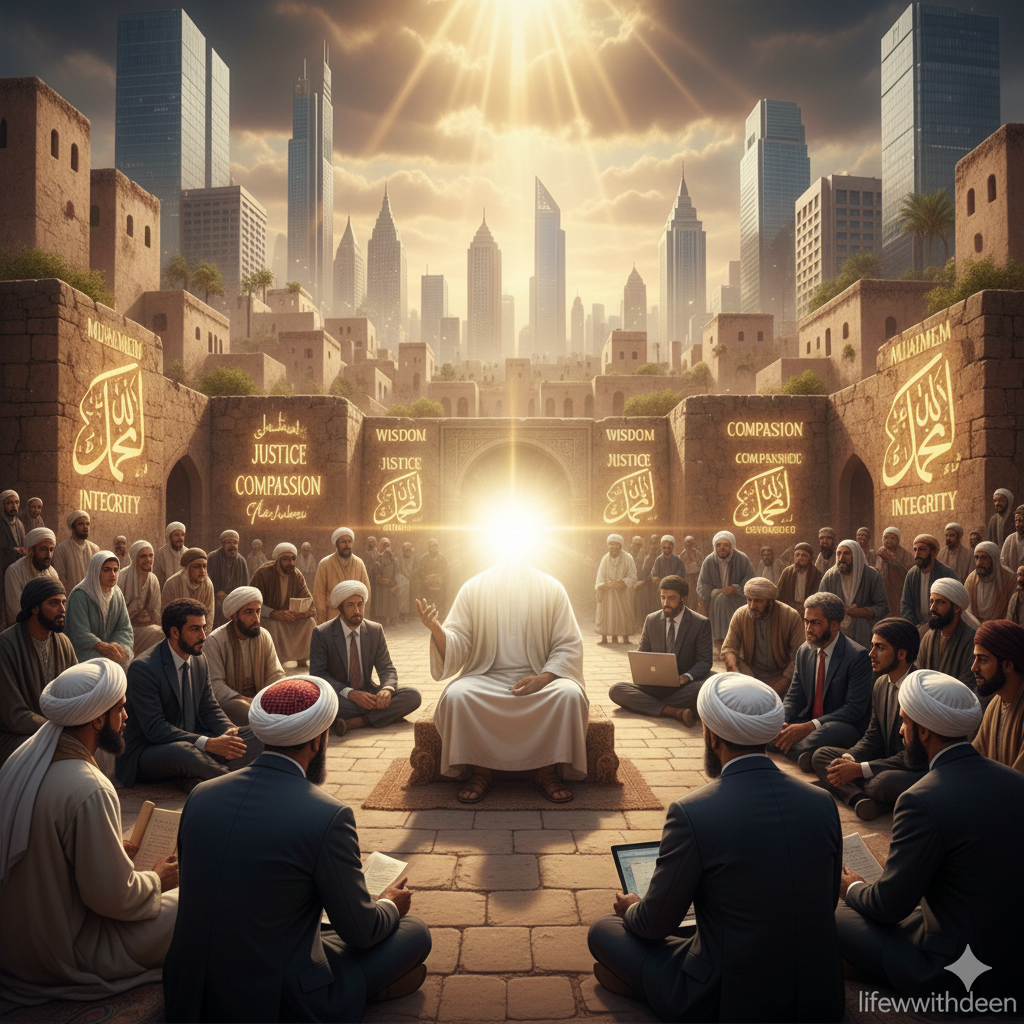
🕌 Leadership Rooted in Revelation
The Prophet ﷺ did not seek leadership — Allah chose him.
Allah says:
“It is He who has sent His Messenger with guidance and the religion of truth…”
(Qur’an 9:33)
His leadership flowed from revelation, purpose, sincerity, and trust in Allah.
🌿 1. Leading With Compassion
One of the greatest qualities of Prophet Muhammad ﷺ was his mercy.
Allah says:
“It is by the mercy of Allah that you were gentle with them.”
(Qur’an 3:159)
He led with kindness, not harshness.
- He listened before he spoke
- He forgave mistakes
- He uplifted the weak
- He valued every person
Modern leadership teaches “empathy” — the Prophet ﷺ practiced it 1400 years ago.
🤍 2. Leading by Example
The Prophet ﷺ never commanded anything unless he practiced it first.
He said:
“The leader of a people is their servant.”
(Hadith: Al-Hakim)
He worked harder than his companions, served his family, helped the poor, and stayed humble even as the most powerful man in Arabia.
This is real leadership — influence through action, not authority.
3. Strategic Planning & Vision
From early Makkah to the Hijrah to Madinah, the Prophet ﷺ demonstrated unmatched strategic thinking.
✔ The Hijrah (Migration)
He planned routes, timings, hiding places, food supplies — showing brilliant planning and foresight.
✔ Treaty of Hudaybiyyah
He accepted terms that seemed unfavorable, but later became a major victory for Muslims.
Great leaders think long-term. The Prophet ﷺ taught us that vision and strategy always win over emotion and impulsiveness.
🌟 4. Empowering Others
He trained leaders, not followers.
- He appointed young leaders like Usama ibn Zaid (age 17)
- He trusted Mus’ab ibn Umayr to teach Islam in Madinah
- He encouraged women to speak, question, and lead
- He honored people based on character, not age or tribe
This leadership style builds strong communities.
5. Justice Without Compromise
The Prophet ﷺ was uncompromising in fairness.
Even if the accused was his own family member, he upheld justice.
He said:
“If my daughter Fatimah were to steal, I would cut off her hand.”
(Bukhari)
Justice is the foundation of leadership — without it, teams, families, and nations collapse.
🌿 6. Emotional Intelligence (EQ)
The Prophet ﷺ understood the hearts of people:
- He comforted the grieving
- Motivated the discouraged
- Praised the sincere
- Corrected gently
- Supported the emotionally weak
He knew when to be firm and when to show softness.
This emotional intelligence allowed him to inspire, motivate, and unify diverse people.
🌸 7. Consultative Leadership (Shura)
Allah commanded him:
“…and consult them in decisions.”
(Qur’an 3:159)
He involved his companions in decisions:
- Battle strategies
- Community matters
- Political agreements
This created ownership, unity, and trust — key elements of effective leadership today.
🌙 8. Resilience in the Face of Hardship
The Prophet ﷺ faced:
- Ta’if’s rejection
- Years of boycott
- Loss of Khadijah رضي الله عنها
- Persecution
- Battles
- Treachery
Yet he remained patient, hopeful, and focused.
He said:
“Patience is at the first strike of calamity.”
(Bukhari)
True leaders stay steady even when storms rise.
🌟 9. Building Strong Teams & Community
The Prophet ﷺ united tribes who had fought for generations.
He built bonds of brotherhood (Mu’akhah) between Muhajirun and Ansar.
He strengthened teamwork, loyalty, and mutual support.
Modern leaders call it “team culture.” The Prophet ﷺ perfected it.
10. Forgiveness & Healing Hearts
The Conquest of Makkah is the greatest example of leadership through forgiveness.
Instead of revenge, the Prophet ﷺ said to his former enemies:
“Go, for you are free.”
This moment transformed enemies into followers.
Forgiveness is a powerful leadership tool — it heals, unites, and opens hearts.
🌸 Conclusion: Leadership That Transforms Hearts
Prophet Muhammad ﷺ demonstrated leadership that was:
- Compassionate
- Strategic
- Intelligent
- Just
- Humble
- Community-centered
- Spiritually rooted
His style can be applied in our homes, workplaces, organizations, and personal development.
The world needs leadership like his — leadership of mercy, wisdom, and character.
May Allah help us follow his example.
اللهم صل وسلم على نبينا محمد ﷺ.