🌙 Introduction: The Turning Point of Ramadan
As Ramadan moves beyond its first ten days, believers enter a deeply significant phase known as the Ashra of Maghfirah — the Ashra of Forgiveness. This is not merely a continuation of Ramadan; it is a turning point.
The first Ashra softens hearts through Allah’s mercy. Once the heart is softened, it becomes ready for cleansing—and that cleansing comes through forgiveness. Without forgiveness, spiritual progress remains incomplete.
Ramadan is not only about increasing good deeds; it is about removing the burden of sins. This is why forgiveness is not secondary in Ramadan—it is central.
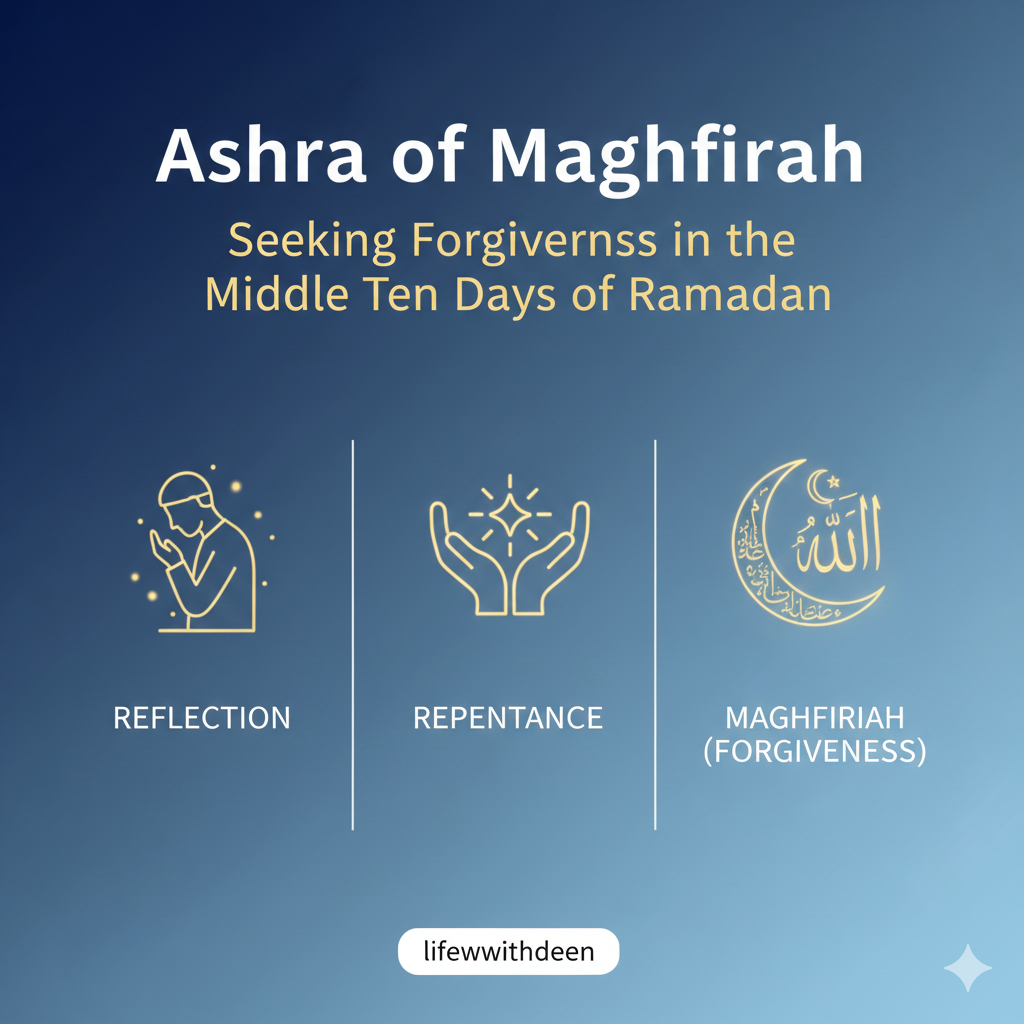
🌿 What Is Maghfirah in Islam?
The word Maghfirah comes from the root meaning:
- to cover
- to protect
- to shield
When Allah grants Maghfirah, He:
- forgives the sin
- covers its trace
- protects the servant from punishment
This shows that divine forgiveness is not shallow—it is complete and dignified.
Allah repeatedly describes Himself as Most Forgiving, reminding believers that forgiveness is part of His mercy, not an exception.
🌙 Forgiveness Is a Core Objective of Ramadan
Ramadan was prescribed to purify believers:
“O you who believe, fasting has been prescribed for you as it was prescribed for those before you, so that you may attain taqwa.”
(Qur’an 2:183)
Taqwa cannot coexist with unchecked sins. Forgiveness clears the path for taqwa by:
- removing guilt
- restoring humility
- reviving hope
- reconnecting the servant with Allah
This is why Ramadan places forgiveness at its heart.
🌙 Why the Second Ashra Is Dedicated to Forgiveness
Islam is a religion of wisdom and gradual reform.
- Ashra 1 (Mercy): Softens the heart
- Ashra 2 (Forgiveness): Cleanses the heart
- Ashra 3 (Salvation): Elevates the soul
Without forgiveness, the heart remains burdened and unprepared for the intense worship of the last ten nights.
This Ashra prepares believers to enter Laylatul Qadr with clean hearts and sincere hope.
🌿 Who Is Forgiveness For?
A dangerous misconception is that forgiveness is only for the righteous.
In reality, forgiveness is for:
- those who fell repeatedly
- those who delayed repentance
- those struggling with sins
- those who feel ashamed to return
Allah’s forgiveness is not limited by the size of sins, but by the sincerity of repentance.
🌙 Conditions of True Forgiveness (Tawbah)
Islam teaches that forgiveness requires honest repentance, which includes:
- Recognizing the sin
- Feeling sincere regret
- Stopping the sin
- Resolving not to return to it
Ramadan strengthens all four conditions by weakening the ego and increasing humility.
🌙 Common Barriers to Forgiveness in Ramadan
Many people miss forgiveness because they:
- justify sins instead of repenting
- delay repentance until the last nights
- focus on others’ faults
- refuse to forgive those who hurt them
Ramadan teaches urgency. Forgiveness delayed is forgiveness endangered.
🌿 Signs That Forgiveness Is Taking Place
A believer may notice:
- reduced attachment to past sins
- emotional relief
- humility replacing pride
- increased hope in Allah
- ease in worship
These are signs that Allah is cleansing the heart.
🌙 Preparing for the Last Ten Nights
The Ashra of Maghfirah is not an endpoint—it is preparation.
A forgiven heart:
- seeks Laylatul Qadr sincerely
- worships without guilt
- experiences closeness to Allah
Those who neglect forgiveness often struggle spiritually in the final Ashra.
🌟 Conclusion: Do Not Miss the Ashra of Maghfirah
The Ashra of Forgiveness is a divine cleansing window.
Mercy invited you.
Forgiveness cleans you.
Salvation awaits you.
Do not let this Ashra pass without sincere repentance, humility, and forgiveness—of yourself and of others.
May Allah forgive our sins, cover our faults, cleanse our hearts, and allow us to enter the last ten nights as truly forgiven servants.
Āmīn 🤍