Barzakh in Islam: Meaning, Life After Death, and What Happens Before the Day of Judgment
Death is not the end of our journey. According to Islam, it is the beginning of another stage of existence. Between death and the Day of Judgment lies a hidden world known as Barzakh.
Every soul will experience Barzakh. It is a period where a person awaits the final resurrection, experiencing either peace and comfort or hardship according to Allah’s justice and mercy.
But what exactly is Barzakh? What happens there? What does the Quran say about it? And what should Muslims know to prepare for it?
Let’s explore this important topic in the light of the Quran and authentic Sunnah.
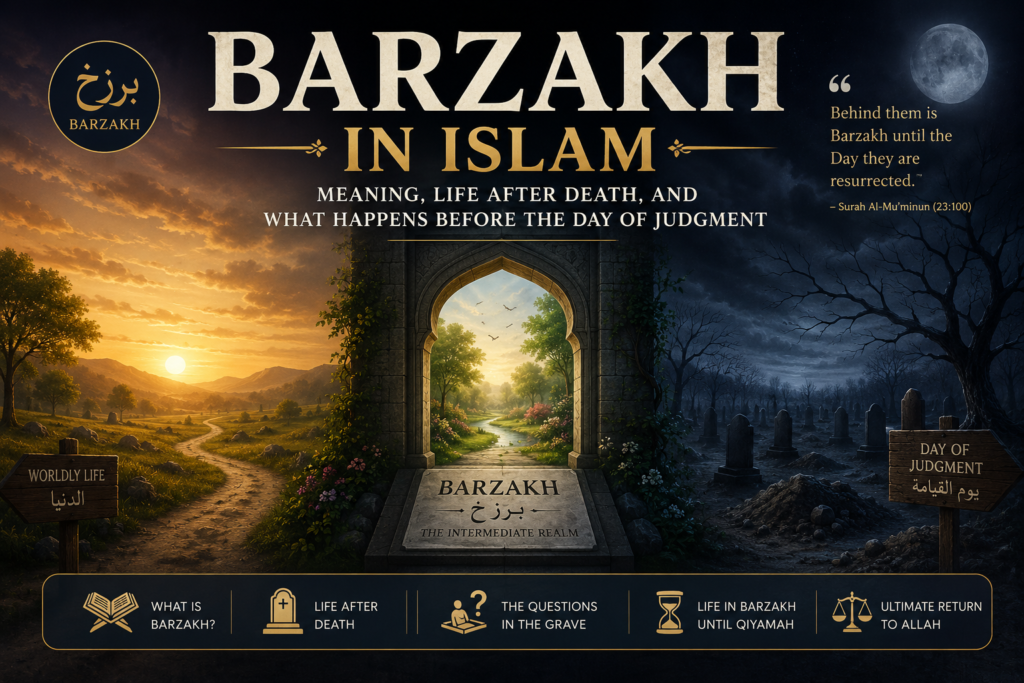
What Does Barzakh Mean?
Barzakh in Islam: The Arabic word Barzakh (برزخ) literally means a barrier, partition, or separation.
In Islamic belief, Barzakh refers to the period between a person’s death and the Day of Judgment. It is a realm that separates this worldly life from the Hereafter.
Allah says:
“…and behind them is a barrier (Barzakh) until the Day they are resurrected.”
(Surah Al-Mu’minun 23:100)
This verse is one of the primary Quranic references to Barzakh and shows that after death, people remain in this intermediate state until they are raised again.
What Happens Immediately After Death?
Barzakh in Islam: When a person dies, the soul departs from the body by Allah’s command.
The Prophet Muhammad ﷺ described that the angels receive the soul. Authentic hadith describe different experiences for the believing soul and the disbelieving soul after death.
The exact details of the unseen are known fully only to Allah, so Muslims rely on authentic Quranic verses and hadith without speculating beyond them.
Is Barzakh the Same as the Grave?
Not exactly.
Many scholars explain that the grave is where a person is buried, while Barzakh is the unseen state that begins after death and continues until the Day of Judgment.
Someone whose body is not buried in the usual way—such as a person lost at sea—still enters Barzakh. This shows that Barzakh is not limited to the physical grave but is a reality of the soul after death.
What Is Life Like in Barzakh?
Islam teaches that Barzakh is a real stage of existence.
Authentic hadith indicate that believers experience comfort and peace according to Allah’s mercy, while those who rejected faith or persisted in wrongdoing without repentance may face punishment according to Allah’s justice.
The full reality of Barzakh belongs to the unseen (Ghayb), so Muslims should avoid adding details that are not established by authentic sources.
The Questions in the Grave
Barzakh in Islam: Authentic hadith mentions that after burial, every person will be questioned by two angels.
The questions include:
- Who is your Lord?
- What is your religion?
- Who is your Prophet?
A believer, by Allah’s permission, answers correctly, while others may be unable to do so.
We will explore these questions in greater detail in our upcoming article on Questions in the Grave in Islam.
Can the Living Communicate with Those in Barzakh?
Barzakh in Islam: Islam encourages believers to pray for the deceased, ask Allah to forgive them, and give charity on their behalf where applicable.
However, the details of communication between the living and the deceased are matters discussed by scholars with nuance. Muslims should avoid practices that have no clear basis in the Quran or authentic Sunnah.
How Long Does Barzakh Last?
Barzakh continues from the moment of death until Allah commands the resurrection on the Day of Judgment.
For each individual, its duration may feel different, but the exact nature of time in the unseen is known only to Allah.
How Can We Prepare for Barzakh?
Barzakh in Islam: The Prophet ﷺ encouraged believers to prepare for the Hereafter through sincere faith and righteous deeds.
Some practical ways include:
- Performing the five daily prayers consistently.
- Seeking forgiveness regularly.
- Reading and reflecting on the Quran.
- Being truthful and honest.
- Fulfilling the rights of others.
- Giving charity.
- Repenting sincerely from sins.
- Making dua for a good ending (Husn al-Khatimah).
Preparing for Barzakh begins while we are still alive
Lessons from Barzakh in Islam
1. Death Is the Beginning, Not the End
Islam teaches that death marks the transition to another stage of existence, reminding us that this world is temporary.
2. Every Deed Matters
Our actions in this life have consequences in the next. Even small acts of worship and kindness can carry great weight with Allah.
3. Prepare Before It’s Too Late
Barzakh begins the moment our worldly life ends. Since no one knows when death will come, Islam encourages constant repentance and righteous living.
Final Reflection
Barzakh reminds us that our life in this world is only one part of a much greater journey. It is a reality that every soul will experience before standing before Allah on the Day of Judgment.
Rather than filling our minds with speculation about the unseen, Islam teaches us to focus on what has been authentically revealed: strengthening our faith, performing righteous deeds, seeking forgiveness, and placing our trust in Allah.
May Allah grant us a peaceful Barzakh, forgive our shortcomings, and admit us into Jannah through His infinite mercy. Ameen.
Frequently Asked Questions
What is Barzakh in Islam?
Barzakh is the intermediate state between death and the Day of Judgment. It begins when a person dies and continues until the resurrection.
Does the Quran mention Barzakh?
Yes. Allah mentions Barzakh in Surah Al-Mu’minun (23:100) as a barrier until the Day of Resurrection.
Is Barzakh the same as the grave?
Not exactly. The grave is the physical resting place, while Barzakh refers to the unseen stage of existence after death.
What happens to the soul in Barzakh?
Authentic Islamic sources teach that the soul experiences conditions appropriate to Allah’s justice and mercy while awaiting the Day of Judgment. The exact details belong to the unseen and should not be described beyond what the Quran and authentic Sunnah establish.