Can Muslims Listen to Music? What Does Islam Really Say
One of the most frequently discussed questions among Muslims is:
👉 Can Muslims listen to music?
Some Muslims believe that all music is prohibited, while others believe that certain types of music may be permissible. Because of these differing views, many people become confused about the Islamic ruling.
The best way to approach this question is to return to the Quran, the authentic Sunnah, and the explanations of qualified scholars.
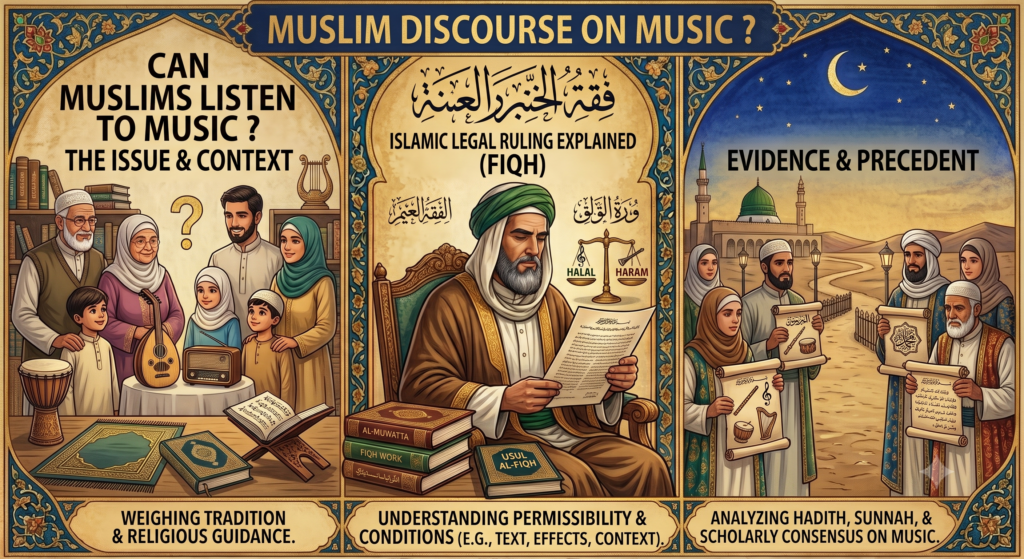
🌙 Does the Quran Clearly Mention Music?
Can Muslims Listen to Music: The Quran does not explicitly state that “music is haram.”
However, some scholars cite verses such as:
“And among the people is he who purchases idle talk to mislead others from the way of Allah…”
(Surah Luqman 31:6)
Many classical scholars interpreted “idle talk” (lahw al-hadith) to include singing or music that distracts people from Allah, although other scholars understood the verse more broadly. Therefore, this verse has been interpreted differently within the Islamic scholarly tradition.
📖 What Do the Hadith Say?
Several hadith are cited in discussions about music.
Can Muslims Listen to Music: One well-known narration in Sahih al-Bukhari mentions that a time would come when some people would regard as lawful things that are prohibited, including musical instruments.
Because of narrations like this, many scholars concluded that musical instruments are generally prohibited.
At the same time, other scholars examined the authenticity, context, and interpretation of these narrations and reached different conclusions regarding certain forms of music.
⚖️ Why Do Scholars Have Different Opinions?
The difference of opinion is not because scholars ignore evidence, but because they evaluate the evidence differently.
Opinion 1: Most Classical Scholars
Can Muslims Listen to Music: Many scholars from the Hanafi, Maliki, Shafi’i, and Hanbali traditions generally discouraged or prohibited musical instruments, while making exceptions that are supported by authentic evidence, such as the use of the duff on certain occasions like weddings and Eid.
Opinion 2: Some Contemporary Scholars
Some scholars distinguish between music that encourages immorality and music that contains clean, beneficial, or neutral content.
According to this view, the ruling depends on:
- The lyrics
- The purpose
- The setting
- Whether it distracts a person from worship or leads to sinful behavior
🌟 What Is Agreed Upon?
Can Muslims Listen to Music: Despite differing opinions about music itself, scholars broadly agree that Muslims should avoid content that:
❌ Promotes immorality
❌ Encourages sinful behaviour
❌ Contains vulgar or obscene lyrics
❌ Distracts a person from obligatory worship
❌ Leads to neglecting one’s duties toward Allah
Regardless of one’s view on music, these principles
❤️ What Should a Muslim Listen To Instead?
Can Muslims Listen to Music: If you wish to strengthen your connection with Allah, consider spending more time with beneficial alternatives such as:
✔ Quran recitation
✔ Islamic lectures
✔ Authentic nasheeds (according to the opinion you follow)
✔ Podcasts with beneficial knowledge
✔ Dhikr and remembrance of Allah
These can nourish both the heart and the mind.
💡 Ask Yourself These Questions
Before listening to any entertainment, ask:
- Does this bring me closer to Allah or distract me from Him?
- Does it encourage good character?
- Does it contain inappropriate language or messages?
- Would I be comfortable if Allah saw me listening to this?
Self-reflection is an important part of a Muslim’s spiritual journey.
🌟 Lessons for Every Muslim
1️⃣ Protect Your Heart
What enters your ears can influence your thoughts and actions.
2️⃣ Choose Beneficial Entertainment
Islam encourages believers to spend their time in ways that benefit them in this life and the Hereafter.
3️⃣ Respect Scholarly Differences
Where qualified scholars have differed based on evidence, Muslims should approach the issue with knowledge, humility, and respect rather than hostility.
🤲 Final Reflection
The question of music has been discussed by Islamic scholars for centuries. While many scholars have considered musical instruments generally impermissible except in specific situations, others have taken a more nuanced approach depending on the type of music and its effects.
Whatever opinion a Muslim follows, the goal should be to seek Allah’s pleasure, protect the heart from harmful influences, and make choices that strengthen faith and good character.
May Allah guide us to what is most pleasing to Him and bless us with wisdom, sincerity, and beneficial knowledge. Ameen.
❓FAQ
Is music haram in Islam?
There are different scholarly opinions. Many classical scholars considered musical instruments generally prohibited (with specific exceptions supported by authentic evidence), while some contemporary scholars distinguish between different types of music and their effects.
Does the Quran directly forbid music?
The Quran does not explicitly mention music by name. Some verses have been interpreted by scholars in relation to music, while others understand them differently.
Did Prophet Muhammad ﷺ allow any musical instruments?
Authentic narrations indicate that the duff was permitted on certain occasions, such as weddings and Eid, under specific circumstances.
What is the safest approach for a Muslim?
A Muslim should avoid entertainment that leads to sin, distracts from worship, or promotes immoral behaviour, and should seek guidance from knowledgeable scholars while striving to strengthen their relationship with Allah.