Introduction: A Question Every Heart Asks
Why does Allah test us?
Early Human Trials: This question quietly lives in almost every heart — especially during hardship, loss, confusion, or repeated failure. The Qur’an does not ignore this question. Instead, Allah answers it through real incidents from the earliest days of humanity.
From the moment Prophet Adam (AS) was created, human life began with tests. These trials were not signs of rejection; they were signs of purpose. Allah included these early human stories in the Qur’an so that every generation could understand the wisdom behind hardship
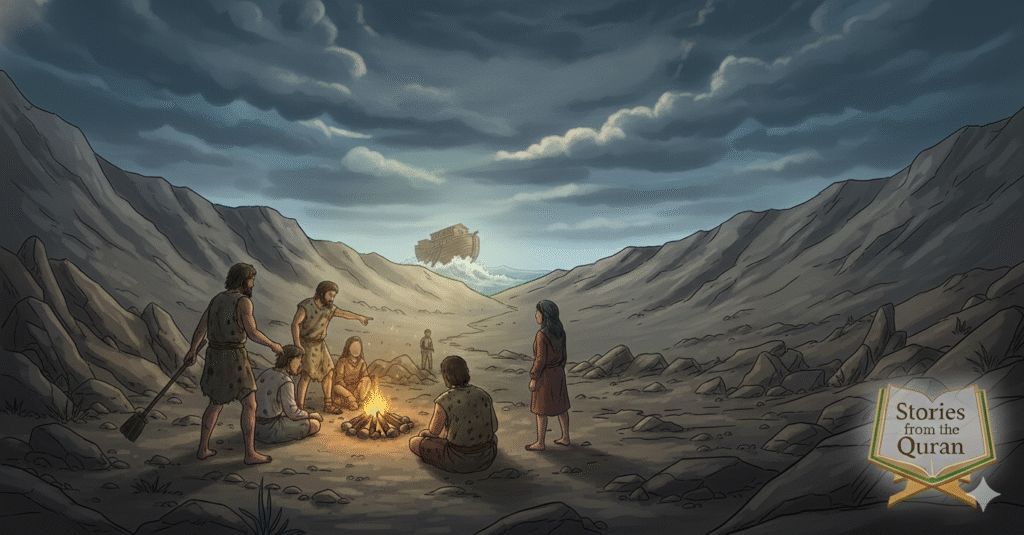
Early Human Trials Began with the First Human
Life on earth did not begin in ease — it began with responsibility.
Adam (AS) was tested with:
- Obedience to Allah
- Resisting Shaytan
- Accepting consequences
- Seeking repentance
When Adam (AS) slipped, Allah did not abandon him. Instead, Allah taught humanity an essential principle: mistakes are followed by accountability, repentance, and guidance.
Allah says:
“Then his Lord chose him, turned to him in forgiveness, and guided him.”
(Surah Ta-Ha 20:122)
This shows that tests are not meant to destroy, but to shape the soul.
The Early Human Trials of Choice and Free Will
One of the greatest honors Allah gave humans is free will. But free will itself is a test.
Early humanity was tested with:
- Choice between obedience and desire
- Truth versus ego
- Patience versus impulse
The incident of Habil and Qabil shows how the same test can lead to completely different outcomes. One chose taqwa; the other chose jealousy.
Allah reminds us:
“Indeed, We have guided him to the way, be he grateful or ungrateful.”
(Surah Al-Insan 76:3)
This verse makes it clear: guidance is shown, choice is ours.
Trials Reveal What Is Hidden in the Heart
Allah does not test humans to gain knowledge — Allah already knows everything. Trials exist to reveal what lies within us.
Early Qur’anic incidents teach us that tests:
- Separate sincerity from hypocrisy
- Distinguish patience from arrogance
- Reveal humility or pride
Just like fire reveals pure gold from impurities, trials expose the true state of the heart.
Allah says:
“Do the people think that they will be left to say, ‘We believe’ and they will not be tested?”
(Surah Al-‘Ankabut 29:2)Why Tests Often Feel Heavy : Early Human Trials
One common misunderstanding is that hardship means Allah is displeased. The Qur’an corrects this thinking through early human trials.
Tests feel heavy because:
- Growth is uncomfortable
- Faith is refined under pressure
- Patience develops slowly
- Dependence on Allah increases
Adam (AS), Nuh (AS), and early believers all faced trials — not because they were weak, but because they were chosen.
Patterns of Divine Wisdom in Early Trials
When we study early Qur’anic incidents together, a clear pattern emerges:
1️⃣ Allah Always Sends Guidance First
No test comes without direction.
2️⃣ Accountability Follows Choice
Humans are responsible for how they respond.
3️⃣ Mercy Is Always Available
Repentance remains open until the end.
4️⃣ Trials Prepare Humanity for Growth
Without tests, there is no spiritual maturity.
5️⃣ Allah’s Plan Is Larger Than the Moment
What feels painful now often holds long-term wisdom.
Trials Are Not Punishment by Default
A very important lesson from the Qur’an is this:
Not every hardship is punishment.
Early human stories show that trials can be:
- A means of elevation
- A form of purification
- A reminder to return to Allah
- A protection from future harm
The believer views trials as messages, not curses.
How to Respond to Trials According to the Qur’an
The Qur’an teaches us to respond with:
- Sabr (patience) – without despair
- Dua – without hesitation
- Self-reflection – without self-hate
- Hope – without doubt
Allah promises:
“Indeed, with hardship comes ease.”
(Surah Ash-Sharh 94:6)
This promise applies to every trial faced since the first human walked the earth.
Relevance for Our Lives Today
Modern believers face:
- Emotional struggles
- Faith confusion
- Family pressure
- Financial stress
- Spiritual lows
The Qur’an reminds us that we are not the first to be tested, and we will not be the last. Early human trials were recorded so we could walk this path with understanding, not confusion.
Conclusion: Tests Are Part of the Design
Human life was designed with trials — not to break us, but to bring us closer to Allah. From Adam (AS) onward, every test carried divine wisdom.
If you are facing hardship today, remember:
- Allah tested before you
- Allah guided after every test
- Allah’s mercy never left
🤲 A Short Dua
O Allah, grant us wisdom in our trials, patience in hardship, and hearts that trust Your plan even when we do not understand it.