Introduction: More Than a Ritual, a Relationship
Salah in Islam: Life gets busy. Responsibilities pile up, worries distract the heart, and days pass quickly. In the middle of all this, Islam gives us something powerful, consistent, and grounding — Salah.
Salah is not just a religious duty performed five times a day. It is a daily appointment with Allah, a moment where the believer steps away from the noise of the world and stands before the Creator.
If Shahadah is the foundation of Islam, then Salah is what keeps that foundation alive.
In this blog, let us understand what Salah truly means, why it holds such a central place in Islam, and how the Qur’an and authentic Hadith describe it as the backbone of a believer’s life.

What Is Salah in Islam?
Salah in Islam: refers to the prescribed Islamic prayer performed five times daily at fixed times. It includes:
- Physical actions (standing, bowing, prostrating)
- Recitation from the Qur’an
- Supplication and remembrance of Allah
But Salah is not only about movement. It is an act of humility, obedience, and connection.
Allah commands in the Qur’an:
“Establish prayer for My remembrance.”
(Qur’an 20:14)
This verse clearly shows that the purpose of Salah is not formality — it is remembrance of Allah.
Why Salah in Islam is the Second Pillar of Islam
After Shahadah, the very next pillar is Salah. This order is not accidental.
Shahadah declares belief, while Salah proves that belief daily.
The Prophet ﷺ said:
“Islam is built upon five pillars… establishing prayer.”
(Sahih Bukhari & Sahih Muslim)
Salah is mentioned immediately after Shahadah because:
- It is the first act of worship made obligatory
- It is the most repeated command in the Qur’an
- It separates belief from negligence
A Muslim’s connection with Allah is measured not by words, but by consistency in Salah.
Salah in Islam in the Qur’an: A Repeated Divine Command
Throughout the Qur’an, Allah repeatedly commands believers to establish prayer:
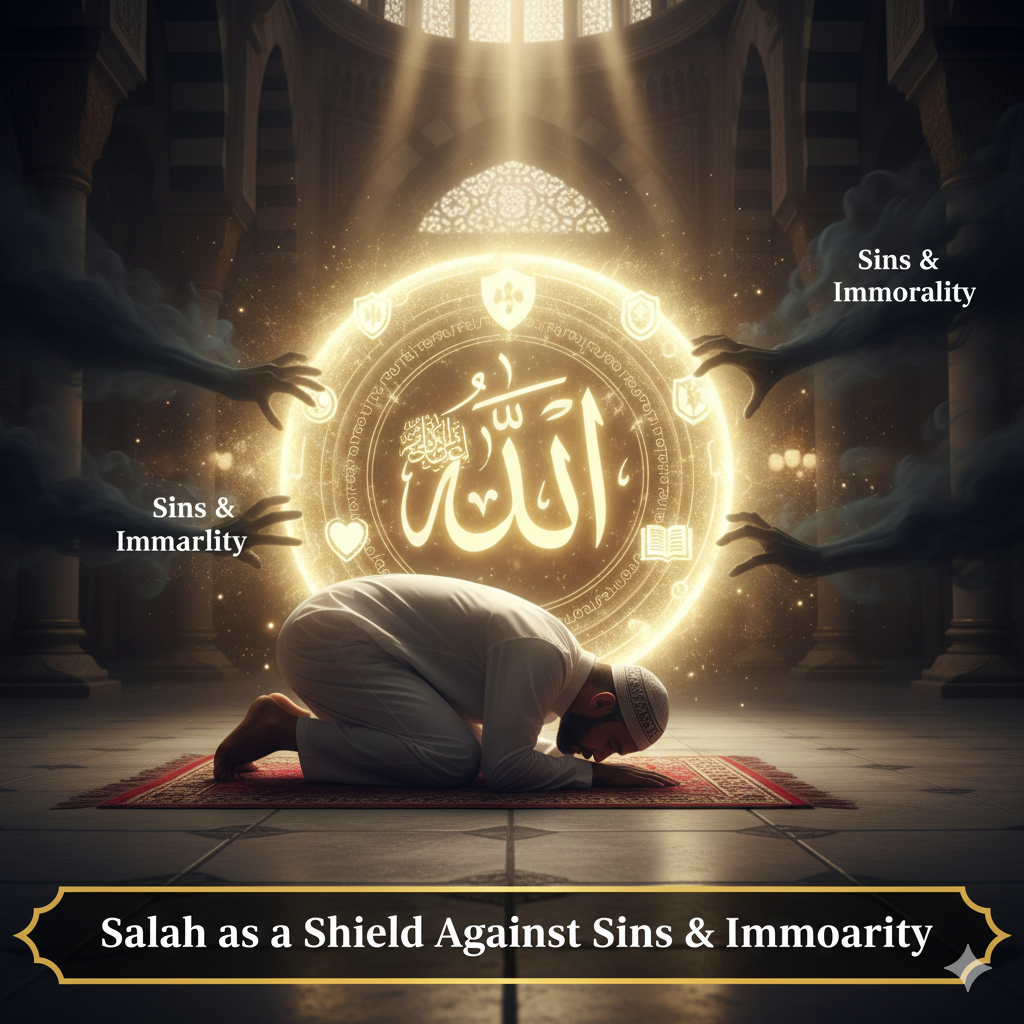
“Indeed, prayer prevents immorality and wrongdoing.”
(Qur’an 29:45)
Salah is not only worship — it is moral training. A person who prays with awareness is constantly reminded of accountability, self-control, and purpose.
Another verse states:
“Guard strictly your prayers, especially the middle prayer.”
(Qur’an 2:238)
This highlights how important consistency and care in Salah are, not casual performance.
The Status of Salah in Authentic Hadith
The importance of Salah is made even clearer in Hadith.
Muhammad ﷺ said:
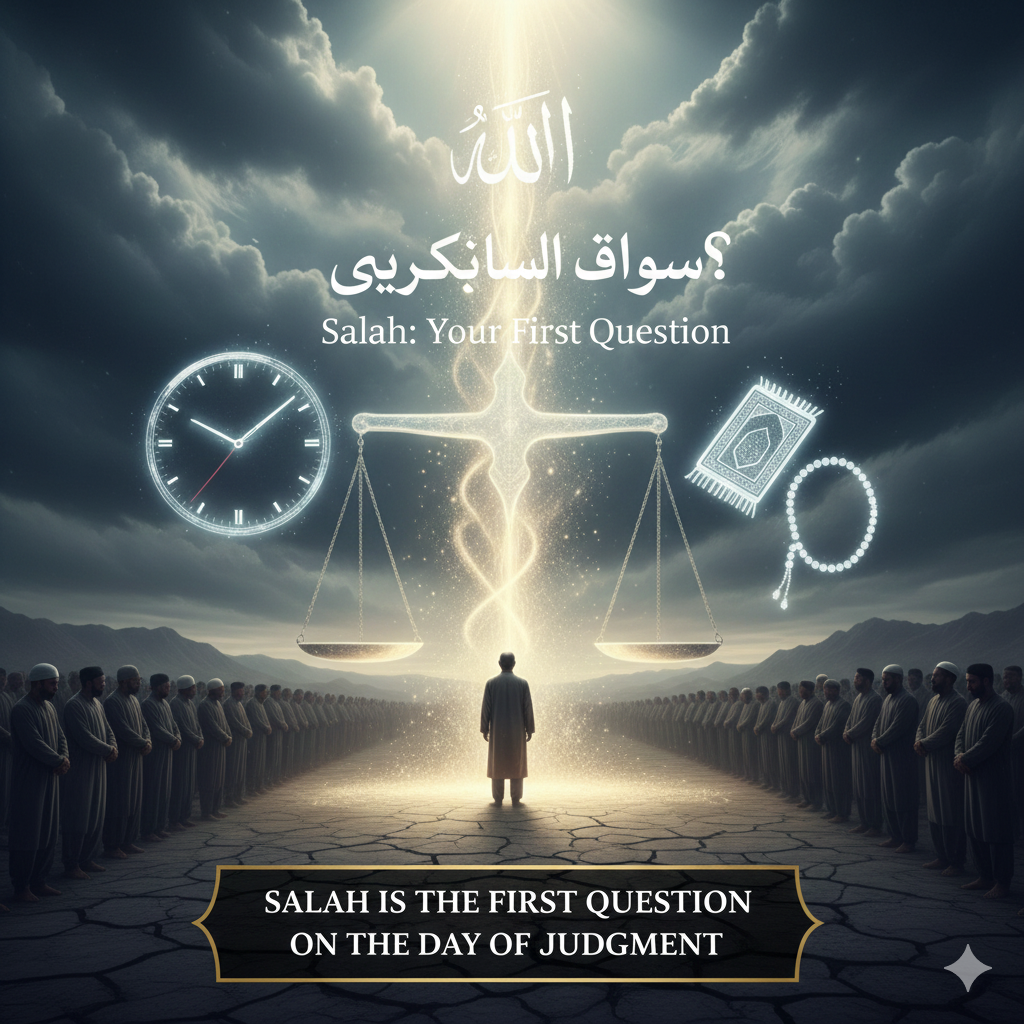
“The first deed for which a servant will be brought to account on the Day of Judgment is the prayer.”
(Sunan Abu Dawood – Hasan)
This Hadith alone should make us pause. Before charity, fasting, or any good deed — Salah comes first.
In another Hadith, the Prophet ﷺ said:
“Between a person and disbelief is abandoning the prayer.”
(Sahih Muslim)
This does not mean every sinner leaves Islam, but it shows how dangerous and serious neglecting Salah is.
Salah in Islam as a Source of Inner Peace
Many people search for peace through success, relationships, or material comfort — yet still feel empty.
Allah gives a simple answer:
“Surely, in the remembrance of Allah do hearts find rest.”
(Qur’an 13:28)
Salah is structured remembrance. When prayed with understanding:
- Anxiety softens
- Worries feel lighter
- The heart feels grounded
Even during hardship, Salah becomes a safe space where a believer pours out fears and hopes before Allah.
What Happens When Salah Is Neglected?
Islam does not hide the consequences of abandoning prayer.
Allah warns:
“But there came after them successors who neglected prayer and followed desires.”
(Qur’an 19:59)
Neglecting Salah slowly leads to:
- Weakening of faith
- Increased attachment to sins
- Loss of spiritual direction
Salah acts like a spiritual compass. When it is lost, the heart easily loses its way.
Salah Is Not a Burden — It Is a Mercy
Some people feel Salah is difficult or heavy. Islam teaches us otherwise.
The Prophet ﷺ used to say:
“O Bilal, give us comfort through prayer.”
(Abu Dawood)
Salah was comfort for him, not stress.
If Salah feels heavy, the issue is not prayer — it is distance from understanding its meaning. Even small steps, like praying on time or understanding Surah Al-Fatiha, can revive its sweetness.
Practical Tips to Improve Your Salah
- Pray on time, even if briefly
- Learn meanings of what you recite
- Remove distractions (phone, noise)
- Make dua sincerely after Salah
- Ask Allah to help you love Salah
Remember, Allah values effort and sincerity, not perfection.
Frequently Asked Questions (FAQs)
❓ Is Salah mandatory for every Muslim?
Yes. Salah is obligatory for every adult, sane Muslim.
❓ What if someone misses prayers?
Missed prayers should be repented for and made up sincerely.
❓ Does Salah still count if concentration is weak?
Yes, but improving focus increases reward and impact.
Conclusion: Salah in Islam :Is Your Daily Meeting with Allah
Salah is not meant to interrupt life — it is meant to realign it.
Five times a day, Allah invites you to pause, reflect, and reconnect. No matter how far a person drifts, Salah always remains an open door back to Allah.
As we continue this Pillars of Islam series, remember:
Shahadah brings you into Islam, but Salah keeps you close to Allah.