🌙 Introduction: When Forgiveness Is Sought but Not Felt
Sin That Blocks Forgiveness: This does not mean Allah’s mercy is limited. Rather, Islam teaches that certain Gunah and attitudes can block forgiveness, even in Ramadan, especially if one does not recognize their Gunah .
The Ashra of Maghfirah is not only about seeking forgiveness—it is also about removing the barriers that prevent it from reaching the heart. Understanding these obstacles allows believers to correct themselves and fully benefit from this blessed phase of Ramadan.
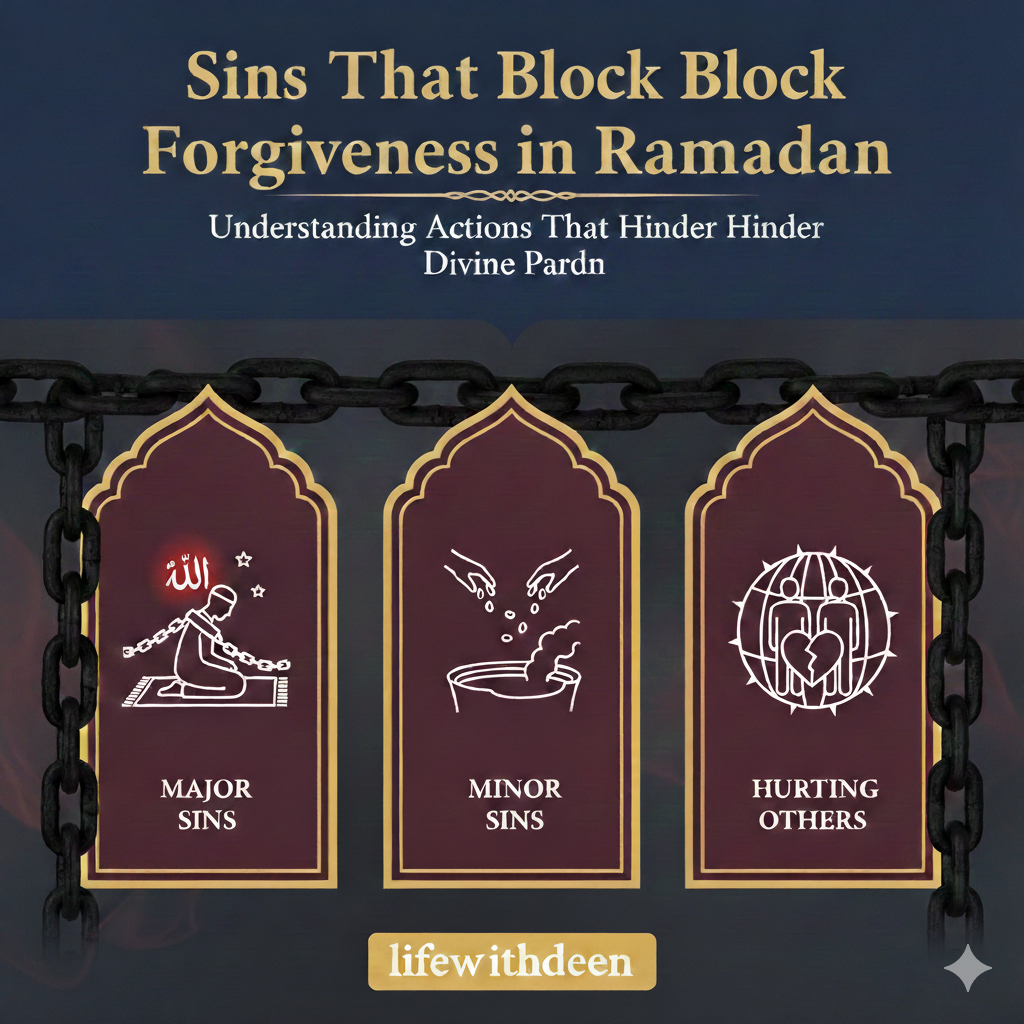
🌿 Forgiveness Has Doors — and Barriers
Allah’s forgiveness is vast, but Islam teaches responsibility alongside hope.
Allah forgives whom He wills, yet He also warns against behaviors that:
- harden the heart
- weaken repentance
- contradict sincerity
Removing these barriers is part of true Tawbah.
🌙Persisting in Gunah Without Regret
One of the greatest blockers of forgiveness is continuing a Gunah while asking Allah to forgive it, without any regret or effort to stop.
True repentance requires:
recognizing the Gunah
- feeling remorse
- making an effort to abandon it
Persisting without regret turns Istighfar into empty words.
🌿Arrogance and Self-Righteousness
Arrogance blinds a person from seeing their faults.
Signs of arrogance include:
- justifying Gunah
- comparing oneself to others
- feeling spiritually superior
Allah loves humility. A heart filled with pride struggles to receive forgiveness.
🌙Holding Grudges and Refusing to Forgive
Refusing to forgive others blocks Maghfirah.
Holding resentment:
- hardens the heart
- poisons worship
- contradicts mercy
Forgiving others does not excuse wrongdoing—it frees the believer from bitterness and attracts Allah’s forgiveness.
🌿Neglecting Obligatory Acts
Voluntary worship cannot replace neglected obligations.
Common examples:
- praying Tarāwīḥ while neglecting obligatory Salah
- fasting while ignoring basic Islamic duties
Neglecting obligations weakens repentance and sincerity.
🌙Consuming What Is Unlawful
Islam teaches that unlawful earnings and consumption affect worship deeply.
Unlawful intake:
- hardens the heart
- weakens duʿāʾ
- delays acceptance
The Ashra of Maghfirah calls believers to purify not only actions, but sources.
🌿Insincerity in Worship
Worship performed for:
- showing off
- social approval
- habit without intention
loses its spiritual weight.
Forgiveness is tied to sincerity, not performance.
🌙Delaying Repentance
Some people postpone repentance, thinking:
“I’ll repent in the last ten nights.”
This mindset is dangerous. Ramadan teaches urgency, not delay.
Forgiveness delayed may be forgiveness missed.
One of the most dangerous spiritual mistakes during Ramadan is taking Gunah lightly simply because the month is blessed. Some people assume that since Ramadan is a month of mercy and forgiveness, their actions will automatically be overlooked. This false sense of security weakens repentance and damages sincerity.
Islam teaches that Ramadan is a time to fear displeasing Allah more, not less. The holiness of the month actually increases accountability, not reduces it. Treating sins casually during Ramadan reflects a misunderstanding of Allah’s mercy. True mercy invites humility, not negligence.
When a believer knowingly repeats a Gunah while thinking, “Allah will forgive me anyway,” the heart slowly loses reverence. Forgiveness is not earned through assumptions, but through sincere remorse and effort to change.
Ramadan trains the soul to respect Allah’s limits more deeply. Honoring the sanctity of the month by avoiding Gunah —especially hidden and habitual ones—removes one of the strongest barriers to Maghfirah and brings the heart closer to true repentance.
🌿Backbiting and Harmful Speech
Backbiting is a common Gunah that:
- destroys good deeds
- damages hearts
- weakens fasting rewards
A tongue that harms others blocks the heart from receiving mercy.
🌙 How to Remove These Barriers
To clear the path to forgiveness:
- abandon sins sincerely
- humble the heart
- forgive others
- protect obligatory worship
- purify income and actions
- seek forgiveness persistently
Removing obstacles is as important as making duʿāʾ.
🌿 Signs That Barriers Are Being Removed
You may notice:
- increased humility
- stronger regret for sin
- softness in worship
- emotional peace
- stronger hope in Allah
These are signs that forgiveness is drawing near.
🌙 Preparing for the Last Ten Nights
The Ashra of Maghfirah cleanses the heart so it can:
- seek Laylatul Qadr sincerely
- worship with focus
- experience closeness to Allah
A heart blocked by Gunah struggles in the final Ashra.
🌟 Conclusion: Remove the Wall Between You and Maghfirah
Allah’s forgiveness is not distant—barriers are.
The Ashra of Maghfirah invites believers to remove arrogance, resentment, insincerity, and neglect, and replace them with humility, sincerity, and repentance.
When barriers fall, forgiveness flows.
May Allah remove every obstacle between us and His Maghfirah, forgive our Gunah , purify our hearts, and allow us to enter the final ten nights cleansed and hopeful.
Āmīn 🤍