🌙 Introduction: Worship Has Many Forms
Many people assume that worship in Islam is limited to prayer, fasting, or visiting the mosque. While these are essential acts of devotion, Islam presents a much broader and more comprehensive understanding of worship (Ibadah).
Types of Worship:In Islam, worship includes not only physical rituals, but also inner states of the heart and everyday actions done with the right intention. This holistic view of worship allows a believer to remain connected to Allah throughout every moment of life.
Understanding the different types of worship helps Muslims practice their faith with balance, awareness, and consistency.
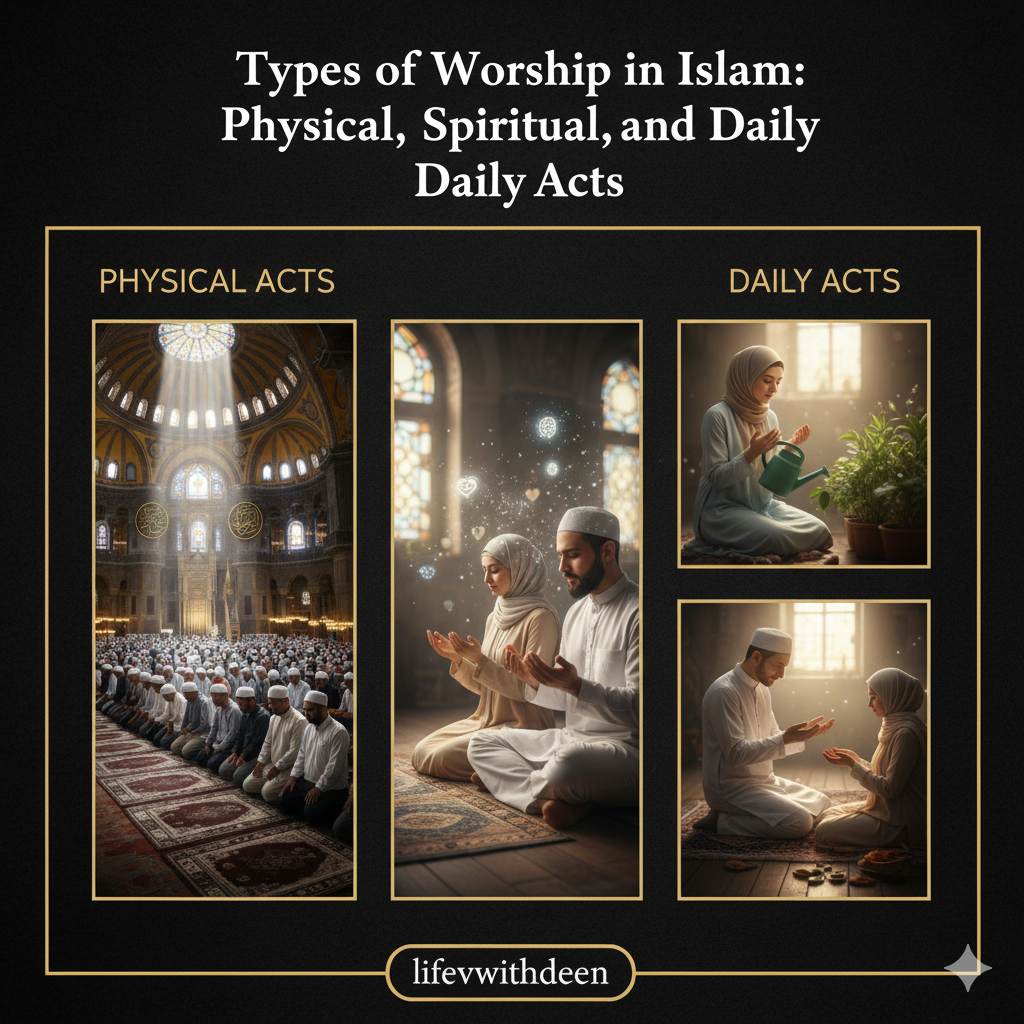
🌿 Worship in Islam: A Complete System
Islamic worship can be understood through three major categories:
- Physical acts of worship
- Spiritual (heart-based) worship
- Daily life actions as worship
Each type plays a vital role in shaping faith, character, and behavior.
🕌 Types of Worship: Physical Acts of Worship
Physical worship includes the observable acts that are clearly defined in Islamic teachings. These acts involve the body and follow specific rules and timings.
🌙 Examples of Physical Worship:
- Salah (Prayer) – the backbone of worship
- Fasting (Sawm) – self-discipline and devotion
- Zakah (Charity) – purification of wealth
- (Pilgrimage) – submission and unity
These acts:
- train discipline
- strengthen obedience
- create routine in worship
- remind believers of their purpose
Physical worship builds a visible relationship with Allah and keeps faith structured and consistent.
🌿 Why Physical Worship Is Essential
Physical worship:
- anchors faith in daily life
- protects from spiritual laziness
- creates accountability
- strengthens self-control
Without physical acts, faith can become weak or purely theoretical. Islam therefore gives great importance to visible worship while still emphasizing sincerity.
🤍Types of Worship: Spiritual (Heart-Based) Worship
Spiritual worship refers to inner actions of the heart that are not seen by people but are deeply valued by Allah.
🌙 Examples of Spiritual Worship:
- Sincerity (Ikhlas)
- Patience (Sabr)
- Gratitude (Shukr)
- Trust in Allah (Tawakkul)
- Fear and hope in Allah
- Love of Allah
These acts are often more difficult than physical worship because they require inner discipline and constant self-awareness.
🌿 Why Heart-Based Worship Matters Most
Islam teaches that the heart is the center of faith. Physical worship without a sincere heart loses value.
Spiritual worship:
- purifies intentions
- removes arrogance and pride
- builds humility
- strengthens reliance on Allah
A small physical deed with a pure heart may outweigh many actions done without sincerity.
🌙 The Balance Between Physical and Spiritual Worship
Islam never separates the body from the heart. True worship requires both action and intention.
For example:
- prayer without humility becomes routine
- patience without trust becomes frustration
- charity without sincerity becomes showing off
Balance ensures worship remains alive, meaningful, and accepted.
🌿Daily Life Actions as Worship
One of the most beautiful aspects of Islam is that ordinary daily actions can become worship.
When done with the right intention and in a lawful manner, daily activities are rewarded like acts of worship.
🌙 Examples of Daily Worship: Types of Worship
- earning halal income
- caring for parents
- raising children responsibly
- being honest at work
- helping neighbors
- smiling with kindness
Islam transforms life itself into worship, making spirituality accessible to everyone.
🤍 The Role of Intention in Daily Worship
Intention (niyyah) is the key that turns normal actions into worship.
For example:
- working becomes worship when done to support family lawfully
- resting becomes worship when done to regain strength for obedience
- learning becomes worship when done to benefit oneself and others
This concept removes the idea that worship is difficult or time-consuming. Instead, life itself becomes a continuous act of devotion.
🌿 Common Mistakes in Understanding Types of Worship
Some common misunderstandings include:
- thinking only rituals count as worship
- neglecting heart-based worship
- ignoring intention
- focusing on quantity instead of quality
Islam corrects these by teaching that Allah looks at hearts, intentions, and consistency, not just outward actions.
🌙 How Understanding Worship Types Improves Faith
When a believer understands all forms of worship:
- guilt decreases
- motivation increases
- balance improves
- faith becomes practical
- daily life feels spiritually meaningful
This understanding prevents burnout and helps believers stay consistent even during busy or difficult times.
🌿 Worship for Everyone, Not Just Scholars
Islamic worship is not reserved for scholars or the extremely righteous. Every believer, regardless of age, profession, or background, can worship Allah continuously through correct intention and ethical living.
This inclusiveness is one of Islam’s greatest strengths.
🌟 Conclusion: Worship Is a Way of Living
Worship in Islam is not confined to specific hours or places. It is a complete lifestyle that includes the body, heart, and daily actions.
When physical worship, spiritual worship, and daily life worship come together, a believer experiences:
- inner peace
- clarity of purpose
- closeness to Allah
May Allah grant us understanding of true worship, sincerity in our actions, and the ability to worship Him in every moment of our lives.
Ameen 🤍