Introduction: Wealth Is a Trust, Not Ownership
Money is something we all work hard for. It brings comfort, security, and choices. But Islam asks a deeper question:
What is the purpose of wealth in your life?
Zakat answers this question clearly.
Zakat in Islam is not a voluntary charity or a favor to the poor. It is a divine obligation, a system designed by Allah to purify wealth, uplift society, and cleanse the heart from greed.
If Salah connects a believer to Allah spiritually, Zakat connects faith to society.
In this blog, let us understand what Zakat truly is, who must give it, and how the Qur’an and authentic Hadith describe its powerful role in Islam
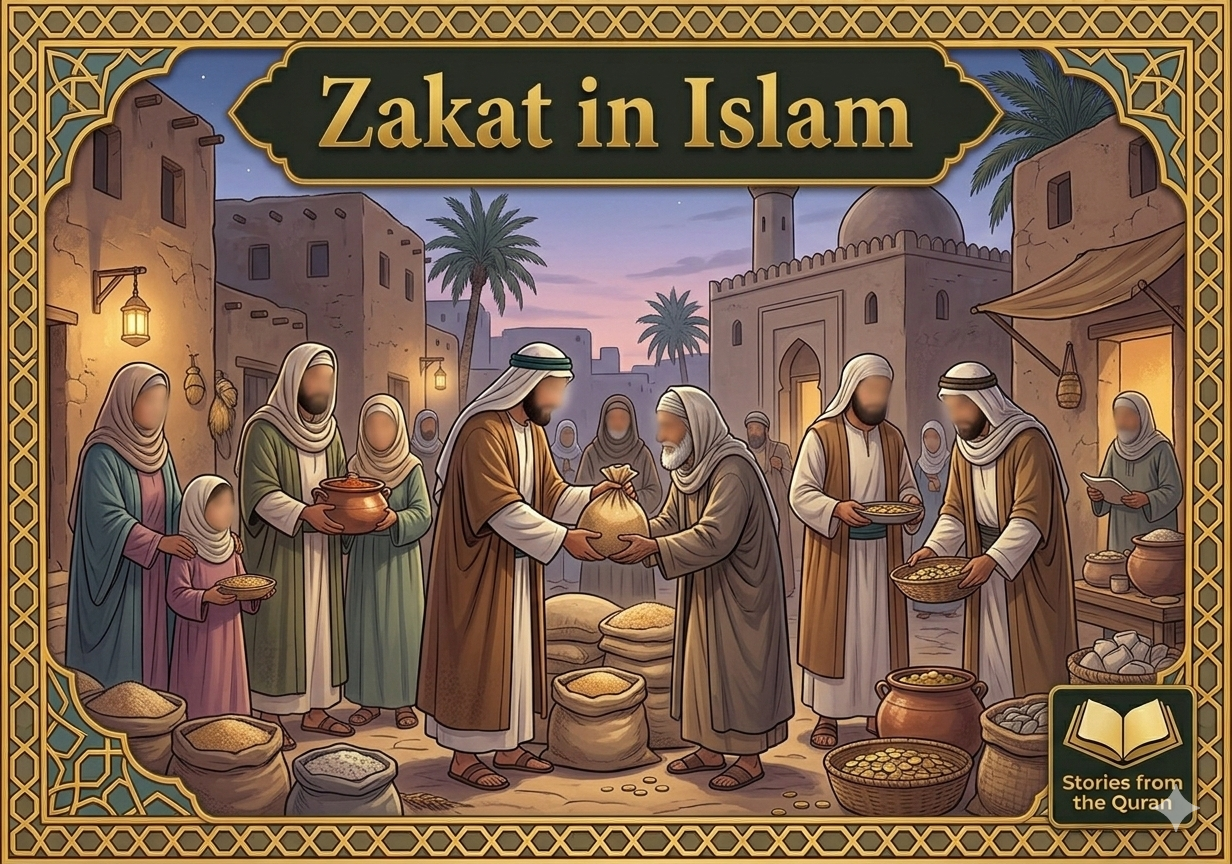
What Is Zakat in Islam?
Zakat in Islam literally means purification and growth. In Islamic law, it refers to a fixed portion of wealth that eligible Muslims must give every year to those entitled to receive it.
Allah commands:
“Take from their wealth charity by which you purify them and cause them increase.”
(Qur’an 9:103)
Zakat is not about losing wealth. It is about purifying what remains.
Why Zakat Is the Third Pillar of Islam
Zakat in Islam comes immediately after Salah in importance. This shows that Islam does not separate worship from social responsibility.
Muhammad ﷺ said:
“Islam is built upon five pillars… establishing prayer and giving Zakat.”
(Sahih Bukhari & Sahih Muslim)
A believer who prays but ignores Zakat is missing a critical part of Islamic faith.
Zakat in the Qur’an: A Repeated Command
Zakat in Islam is mentioned alongside Salah dozens of times in the Qur’an:
“Establish prayer and give Zakat.”
(Qur’an 2:110)
This pairing teaches us that:
- Salah purifies the soul
- Zakat purifies the wealth
Both are essential for a balanced Islamic life.
Allah also warns against hoarding wealth:
“Those who hoard gold and silver and do not spend it in the way of Allah—give them tidings of a painful punishment.”
(Qur’an 9:34)
Who Is Obligated to Pay Zakat?
Zakat in Islam is obligatory on every Muslim who:
- Is adult and sane
- Owns wealth above the Nisab threshold
- Has possessed that wealth for one lunar year
Zakat applies to:
- Cash and savings
- Gold and silver
- Business assets
- Investments
It is not required on daily-use items like clothes, home, or car.
How Much Zakat Must Be Paid?
For most types of wealth, Zakat is:
2.5% (1/40th)
This small percentage creates a massive social impact when practiced collectively.
Zakat is not meant to burden — it is designed to be easy, fair, and sustainable.
Who Can Receive Zakat?
Allah Himself lists the eligible recipients:
“Zakat is for the poor, the needy, those employed to collect it, those whose hearts are to be reconciled, freeing captives, those in debt, in the cause of Allah, and the traveler.”
(Qur’an 9:60)
This shows that Zakat is a complete welfare system, not random charity.
Zakat vs Charity (Sadaqah): Know the Difference
| Zakat | Sadaqah |
|---|---|
| Obligatory | Voluntary |
| Fixed amount | Any amount |
| Specific recipients | Anyone |
| Annual duty | Anytime |
Both are rewarded, but Zakat cannot be replaced by Sadaqah.
Spiritual Benefits of Giving Zakat
Zakat transforms more than society — it transforms the giver.
The Prophet ﷺ said:
“Charity does not decrease wealth.”
(Sahih Muslim)
Zakat:
- Removes greed from the heart
- Builds empathy and gratitude
- Brings barakah (blessing) in wealth
- Strengthens trust in Allah
Many people experience that after giving Zakat, their wealth feels lighter but more meaningful.
Consequences of Neglecting Zakat
Islam speaks clearly about neglecting Zakat.
Allah warns:
“On the Day it will be heated in the Fire of Hell and their foreheads, sides, and backs will be branded with it.”
(Qur’an 9:35)
This warning is not to scare, but to remind us that wealth comes with responsibility.
Ignoring Zakat hardens the heart and increases attachment to the duniya.
Zakat in Modern Life: Still Relevant?
Absolutely.
In a world of growing inequality, Zakat:
- Supports the poor with dignity
- Reduces extreme wealth gaps
- Encourages ethical earning
- Creates social balance
Islam solved economic injustice 1400 years ago through Zakat.
Frequently Asked Questions (FAQs)
❓ Is Zakat mandatory every year?
Yes, if wealth remains above Nisab for a full lunar year.
❓ Can Zakat be given to relatives?
Yes, except parents, grandparents, children, and spouse.
❓ Can Zakat be paid online?
Yes, if it reaches eligible recipients correctly.
Conclusion: Zakat Is Not Loss, It Is Liberation
Zakat teaches a powerful lesson:
You do not own wealth — you are entrusted with it.
When a believer gives Zakat sincerely, wealth becomes purified, society becomes stronger, and the heart becomes free from greed.
As we continue this Pillars of Islam series, remember:
Salah connects you to Allah, and Zakat connects you to humanity — both are acts of worship.